
-
Welcome to N-cars.net - the largest Hyundai N car forum. Check out the model specific sections below and scroll down for country specific forums. Scroll down for i30 N, Ioniq 5 N, i20 N, Veloster N and Kona N forums! Check out the i30 N Bible Here!
Brake pads
- Thread starter Ches7
- Start date
You are using an out of date browser. It may not display this or other websites correctly.
You should upgrade or use an alternative browser.
You should upgrade or use an alternative browser.

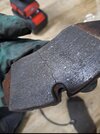
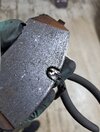
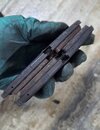
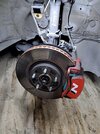
Ok the pads are on. Thanks for all the advice, 3 out of 4 pads were cracked in the middle (example picture attached).
Sensor wire was not severed but looked melted. Shorted the leads with some quick solder job, shrink wrapped and install back on to the socket. No more annoying check pads warning.
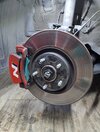
Cleaned up all contact surfaces and slightly lubed with high temperature ceramic grease.
Went for a quick spin and first impression was too much pedal pressure needed for adequate brake force to be generated. Once i got some heat into them like 6-7 brakes from 70 to 20 and they started biting much better. Abs kicks in much easier with these pads.
One pleasant surprise, absolutely zero squealing. I was expecting them to squeal from what i read but absolutely none what so ever. I'm wondering if rhd japan painted turquoise over some standard pads and sell them as pmu =) that quite.
One snag though, through the end of my drive, i was doing the braking and accelerating back to back to make sure all is fine and there was a sharp metallic clank under braking from front left, like something metal under heavy load snapped. Felt it through the steering wheel. Was scary. Did another round of inspection and all seems fine. Retainer springs are in place, bolts are in place, nothing broken that i could see. I thought maybe I didn't seat one of the retainer plates properly and it snapped back in place. Guess i will never know. Did some more testing and call it a day.
Sensor wire was not severed but looked melted. Shorted the leads with some quick solder job, shrink wrapped and install back on to the socket. No more annoying check pads warning.
Cleaned up all contact surfaces and slightly lubed with high temperature ceramic grease.
Went for a quick spin and first impression was too much pedal pressure needed for adequate brake force to be generated. Once i got some heat into them like 6-7 brakes from 70 to 20 and they started biting much better. Abs kicks in much easier with these pads.
One pleasant surprise, absolutely zero squealing. I was expecting them to squeal from what i read but absolutely none what so ever. I'm wondering if rhd japan painted turquoise over some standard pads and sell them as pmu =) that quite.
One snag though, through the end of my drive, i was doing the braking and accelerating back to back to make sure all is fine and there was a sharp metallic clank under braking from front left, like something metal under heavy load snapped. Felt it through the steering wheel. Was scary. Did another round of inspection and all seems fine. Retainer springs are in place, bolts are in place, nothing broken that i could see. I thought maybe I didn't seat one of the retainer plates properly and it snapped back in place. Guess i will never know. Did some more testing and call it a day.
Attachments
-
 Screenshot_20260729_012403_Photos~2.jpg322.6 KB · Views: 22
 -
 Screenshot_20260729_012418_Photos~2.jpg320.5 KB · Views: 21
 -
 Screenshot_20260729_012436_Photos~2.jpg227.1 KB · Views: 23
 -
 Screenshot_20260729_012747_Photos~2.jpg324.9 KB · Views: 22
 -
 Screenshot_20260729_014755_Photos~2.jpg319.1 KB · Views: 22
Just received a response from pmu to my question regarding the pad return springs and recommended bed-in procedure for hc+ compound. Below is their response in its entirety in case anyone needs it.
"Dear Customer,
Thank you for choosing our products and for your the email.
Regarding the pad return springs, this part number doesn’t have the holes for them.
It is acceptable to install these brake pads without the springs. In fact, we generally recommend no springs for the high-performance pads.
The high performance pads could be running at high temperature, which may cause the springs to fall out and causes issues.
Bedding in can be done simply through normal driving.
The brake pads have already been heat treated. Please do not drag the brakes or attempt to burnish them.
You can run the pads for at least 100km under normal driving conditions.
Thank you again for choosing out products.
Regards,
Project Mu"
"Dear Customer,
Thank you for choosing our products and for your the email.
Regarding the pad return springs, this part number doesn’t have the holes for them.
It is acceptable to install these brake pads without the springs. In fact, we generally recommend no springs for the high-performance pads.
The high performance pads could be running at high temperature, which may cause the springs to fall out and causes issues.
Bedding in can be done simply through normal driving.
The brake pads have already been heat treated. Please do not drag the brakes or attempt to burnish them.
You can run the pads for at least 100km under normal driving conditions.
Thank you again for choosing out products.
Regards,
Project Mu"
I, too, have installed the Project Mu HC+ for the last few track days of the year.
Took the opportunity to upgrade the discs to a semi-floating two-pieces design with aluminum bells. These discs are grooved and, crucially, have directionally cooling vanes. They are made to order by a small Italian company (Dyno Disc on Instagram).
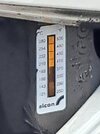
Also, I have never been super satisfied by my HRNSHN brake cooling kit (the air routing is really long, the outlet is on the inner disc face and I have measured 210 deg C at the caliper even after installing this kit). I decided to remove the hose from the wheel arch to the brake disc (while leaving the rest of the kit so that at least air is taken from the front of the car and blown inside the wheel compartment). I then installed the Speed Engineering brake cooling kit, which feeds air from under the lower wishbone directly to the center of the disc. This kit gave me some issues (about which I wrote a post here), but managed to get a decent installation.
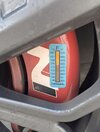
I slammed on the calipers some temperature measurement strips and now ready to test the upgrade soon, will report back
Took the opportunity to upgrade the discs to a semi-floating two-pieces design with aluminum bells. These discs are grooved and, crucially, have directionally cooling vanes. They are made to order by a small Italian company (Dyno Disc on Instagram).
Also, I have never been super satisfied by my HRNSHN brake cooling kit (the air routing is really long, the outlet is on the inner disc face and I have measured 210 deg C at the caliper even after installing this kit). I decided to remove the hose from the wheel arch to the brake disc (while leaving the rest of the kit so that at least air is taken from the front of the car and blown inside the wheel compartment). I then installed the Speed Engineering brake cooling kit, which feeds air from under the lower wishbone directly to the center of the disc. This kit gave me some issues (about which I wrote a post here), but managed to get a decent installation.
I slammed on the calipers some temperature measurement strips and now ready to test the upgrade soon, will report back
Last edited:
I hope you get positive results with your new setup, looks promising. I would expect cool air at the center to improve things especially with directional discs. I'm looking forward to your comments on the hc+ pads even though you have different discs now. They've been serving me well so far. But you are more demanding than I am from the brakes, which is a good benchmark for me =).I, too, have installed the Project Mu HC+ for the last few track days of the year.
Took the opportunity to upgrade the discs to a semi-floating two-pieces design with aluminum bells. These discs are grooved and, crucially, have directionally cooling vanes. They are made to order by a small Italian company (Dyno Disc on Instagram).
Also, I have never been super satisfied by my HRNSHN brake cooling kit (the air routing is really long, the outlet is on the inner disc face and I have measured 210 deg C at the caliper even after installing this kit). I decided to remove the hose from the wheel arch to the brake disc (while leaving the rest of the kit so that at least air is taken from the front of the car and blown inside the wheel compartment). I then installed the Speed Engineering brake cooling kit, which feeds air from under the lower wishbone directly to the center of the disc. This kit gave me some issues (about which I wrote a post here), but managed to get a decent installation.
I slammed on the calipers some temperature measurement strips and now ready to test the upgrade soon, will report back
Meanwhile I replaced my worn out factory tires with pz5's and been to my first track session with them (posted my experience on another thread here). Maybe because of the extra grip and me still learning how to properly use my brakes on the track, this time my caliper temperature exceeded 210 degrees. Which makes me worry about my piston seals. I think I also boiled my fluid in one occasion (my first experience of such) which was a bit scary.
There were also local races the same day so i get to inspect some of the i20n race cars. Most were upgraded to dual piston brembo or ebc kits with presumably the same diameter discs. Almost all the cars were on trofeo rs tires. I managed to spot a heat strip on one of them and to my surprise it was running cooler than my brakes on this session despite the abuse twice as long.
My next move would be to upgrade my brake fluid. I was looking at the superior Castrol react srf as a flush and forget option but it seems to be not available here. Will possibly have to go to one from the motul rbf series and learn how to flush my brake fluid myself.
Stock fluid on the i20n is low viscosity dot4 to meet the design specs of the abs, esc etc. and high temp racing fluids being thicker could mess with them engaging timely on daily driving in low temps. Still haven't figured that one out.
I'm not brave enough to remove my heat shields for the fear of damaging more seals in the wheel well area. Apparently my best bet for saving my piston seals is to manufacture my own titanium shims which is not going to happen any time soon. Till then i will have to throw in an extra cool down lap mid session.
Attachments
I’m using RBF660 basically since the car is new, it works really well. Even after track days in which I have felt the pedal go soft, when I bleed the system I very rarely find any bubbles at all.
Staying below 180deg at the caliper is the target, let’s hope I would say that piston seals are pretty though, mine still look good. So far I only encountered a sliding pin that blocked (maybe that’s what caused the loud noise of the Endless after all…)
Still not convinced about the theory that the splash guards actually protect anything, they just prevent heat to escape I think
Staying below 180deg at the caliper is the target, let’s hope
I would say that piston seals are pretty though, mine still look good. So far I only encountered a sliding pin that blocked (maybe that’s what caused the loud noise of the Endless after all…)Still not convinced about the theory that the splash guards actually protect anything, they just prevent heat to escape I think

Motul is the biggest shit on brake fluids!
Try Castrol shit on oil's, but their SRF is the key. You wouldn't be disappointed, it costs nearly double the price! But has an other stability and longevity, which reduces the fluid costs at the end of the day. Performance wise it is also much better!
All that Motul performance & race fluids are for bikes, small cheap bottles becaus on bikes bleeding is that easy, Motul is made for bleeding after every stint or day.
Try Castrol shit on oil's, but their SRF is the key. You wouldn't be disappointed, it costs nearly double the price! But has an other stability and longevity, which reduces the fluid costs at the end of the day. Performance wise it is also much better!
All that Motul performance & race fluids are for bikes, small cheap bottles becaus on bikes bleeding is that easy, Motul is made for bleeding after every stint or day.
Still not convinced about the theory that the splash guards actually protect anything, they just prevent heat to escape I think

I have brakes this hot, initially using Carbotech and then PBS with the Brembo. Even with the Carbotech on the standard callipers, the pedal was rock solid and no fade. The same with the Brembo so I doubt fluid will be a problem unless you have old or poor fluid. I do have the speed engineering kit, but have never fitted it as it looks pretty ineffective. If someone is good with design and a 3D printer a brake cooling set up that uses the flog light (the lights do zero anyway) aperture and some proper large bore cooling would be good.I hope you get positive results with your new setup, looks promising. I would expect cool air at the center to improve things especially with directional discs. I'm looking forward to your comments on the hc+ pads even though you have different discs now. They've been serving me well so far. But you are more demanding than I am from the brakes, which is a good benchmark for me =).
Meanwhile I replaced my worn out factory tires with pz5's and been to my first track session with them (posted my experience on another thread here). Maybe because of the extra grip and me still learning how to properly use my brakes on the track, this time my caliper temperature exceeded 210 degrees. Which makes me worry about my piston seals. I think I also boiled my fluid in one occasion (my first experience of such) which was a bit scary.
There were also local races the same day so i get to inspect some of the i20n race cars. Most were upgraded to dual piston brembo or ebc kits with presumably the same diameter discs. Almost all the cars were on trofeo rs tires. I managed to spot a heat strip on one of them and to my surprise it was running cooler than my brakes on this session despite the abuse twice as long.
My next move would be to upgrade my brake fluid. I was looking at the superior Castrol react srf as a flush and forget option but it seems to be not available here. Will possibly have to go to one from the motul rbf series and learn how to flush my brake fluid myself.
Stock fluid on the i20n is low viscosity dot4 to meet the design specs of the abs, esc etc. and high temp racing fluids being thicker could mess with them engaging timely on daily driving in low temps. Still haven't figured that one out.
I'm not brave enough to remove my heat shields for the fear of damaging more seals in the wheel well area. Apparently my best bet for saving my piston seals is to manufacture my own titanium shims which is not going to happen any time soon. Till then i will have to throw in an extra cool down lap mid session.
Unfortunately i will have to go with motul with regular (yearly maybe?) drains. Will buy some rbf600 if i can find some. I could get this far with the stock fluid after all and the wet boiling point is same on all and dry boiling point increase is nothing that would make any difference to me at least. And i expect 600 to last longer due to the chemistry being less hydroscopic.Motul is the biggest shit on brake fluids!
Try Castrol shit on oil's, but their SRF is the key. You wouldn't be disappointed, it costs nearly double the price! But has an other stability and longevity, which reduces the fluid costs at the end of the day. Performance wise it is also much better!
All that Motul performance & race fluids are for bikes, small cheap bottles becaus on bikes bleeding is that easy, Motul is made for bleeding after every stint or day.
My brake fluid is stock and almost 2 year old which i never bled.
Maybe what i experienced was abs actuation? The pedal basically went all the way down suddenly during heavy braking and then recovered. But i dont remember how, maybe i lifted or it recovered itself. Need to check footage if its visible there.
Wow that seal is cooked!I have brakes this hot, initially using Carbotech and then PBS with the Brembo. Even with the Carbotech on the standard callipers, the pedal was rock solid and no fade. The same with the Brembo so I doubt fluid will be a problem unless you have old or poor fluid. I do have the speed engineering kit, but have never fitted it as it looks pretty ineffective. If someone is good with design and a 3D printer a brake cooling set up that uses the flog light (the lights do zero anyway) aperture and some proper large bore cooling would be good.
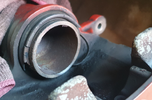
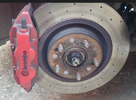
View attachment 28025
View attachment 28026View attachment 28026
I might remove my shields or trim them maybe. All i need is at least 10 degrees off.

my seals did the same thing due to heat, replaced them all but not had a track day since.I have brakes this hot, initially using Carbotech and then PBS with the Brembo. Even with the Carbotech on the standard callipers, the pedal was rock solid and no fade. The same with the Brembo so I doubt fluid will be a problem unless you have old or poor fluid. I do have the speed engineering kit, but have never fitted it as it looks pretty ineffective. If someone is good with design and a 3D printer a brake cooling set up that uses the flog light (the lights do zero anyway) aperture and some proper large bore cooling would be good.
View attachment 28025
View attachment 28026View attachment 28026
i found this guy on insta that does the cooling ducts from behind the bumper next to fog light, does look pretty good and also retains the factory cooling duct
his name is magister_designs
This design is by far the cleanest I've seen. Those inlets are at the correct place and should provide good amount of cold air.my seals did the same thing due to heat, replaced them all but not had a track day since.
i found this guy on insta that does the cooling ducts from behind the bumper next to fog light, does look pretty good and also retains the factory cooling duct
his name is magister_designs
SRF is about 270 wet 310-320 dry, if you trash the SRF it doesn't care, if you track the car a whole season, then change it per year.
Regular road trashing, every 2-3 year. It isn't that much hydroscopic like the whole Motul range.
SRF will cost approximately 70€ per litre, of course you may need 2 litres to flush your system complete. I have started using SRF as a advice by a professional.
I can race uphill & downhill on the Alps with that fluid on a 30 minute stint.
Regular road trashing, every 2-3 year. It isn't that much hydroscopic like the whole Motul range.
SRF will cost approximately 70€ per litre, of course you may need 2 litres to flush your system complete. I have started using SRF as a advice by a professional.
I can race uphill & downhill on the Alps with that fluid on a 30 minute stint.
Still the routing is much longer than the SE ones, not sure if the mass flow rate will be as goodThis design is by far the cleanest I've seen. Those inlets are at the correct place and should provide good amount of cold air.
Seems great (except the priceSRF is about 270 wet 310-320 dry, if you trash the SRF it doesn't care, if you track the car a whole season, then change it per year.
Regular road trashing, every 2-3 year. It isn't that much hydroscopic like the whole Motul range.
SRF will cost approximately 70€ per litre, of course you may need 2 litres to flush your system complete. I have started using SRF as a advice by a professional.
I can race uphill & downhill on the Alps with that fluid on a 30 minute stint.
 ), but as said the RBF has served me well so far (the small bottles are great for quick bleeding after track days, 10 brake pumps or so to swap the oil inside the calipers). If I get temps down but still occasional spongy pedal I will try out SRF
 Srf is undoubtedly superior and is silicone based rather than polyglycol like most of the stuff out there. It sure outperforms in every aspect on paper including viscosity (and possibly in real life). I would get srf and forget about it if only they sold it over here.
Do you have any recommendations on how to bleed and drain brakes? I've never done it before fearing I would introduce air into the system. Do i really need to bleed after every track session?
Do you have any recommendations on how to bleed and drain brakes? I've never done it before fearing I would introduce air into the system. Do i really need to bleed after every track session?
Agreed, but i believe the pressures at the inlet would be in favor of this kit. The ones that pull air from under the car are seeing very turbulent streams, that is not ideal either. We should also consider the thickness of the duct and the sharpness of the turns it takes.Still the routing is much longer than the SE ones, not sure if the mass flow rate will be as good
With the two persons method it is really simple: one pumping the pedal and the other cracking open the valve to get the oil out. The key is to not lift the foot from the pedal until the valve is closed and to keep topping up the reservoir, plenty of good vids on YT. Also important to use a good quality tube, I have the simplest kit from BGS and works great. I have now got their tube with non return valve so as to be able to do everything by myself. If you accidentally get some air into the caliper, just bleed some moreDo you have any recommendations on how to bleed and drain brakes? I've never done it before fearing I would introduce air into the system.
Absolutely not, I have done all of 2025 (20k+ km and 5-6 track days) and when I went to bleed the system there were barely any bubbles (but the oil was definitely a tiny bit darker than the fresh one, maybe because of some water starting to get mixed in?). This year I am trying to do it more often to chase the cause of the pedal going softish after consecutive push laps, but I’m getting convinced it is not the fluid or at least not an all out boiling issue (maybe air trapped in the ABS circuit or just an effect of having the whole caliper pretty damn hot and losing some stiffness)Do i really need to bleed after every track session?
Surely true, better input pressure, but I think the real inlet size is smaller than it seems from the pictures as the aperture near the fog light isn’t that big at all (while the size of the SE one has surprised me, to the point that it looks pretty easy to be taken out by a kerb or somethingAgreed, but i believe the pressures at the inlet would be in favor of this kit. The ones that pull air from under the car are seeing very turbulent streams, that is not ideal either. We should also consider the thickness of the duct and the sharpness of the turns it takes.
 but I know they’ve looked into it) plus I’d guess more that double the hose length…