• Welcome to N-cars.net - the largest Hyundai N car forum. Check out the model specific sections below and scroll down for country specific forums. Scroll down for i30 N, Ioniq 5 N, i20 N, Veloster N and Kona N forums! Check out the i30 N Bible Here!

Brake pads

I assume you did proper burnishing and bed in before going on track. If not, even minor undulations on the disk could create localized hot spots and maybe result in brakedown of the compound? Maybe this could explain the excess deposits but soft pedal is strange indeed.
They suggest to either do 10 stops 100-0kph or to do 3 track laps in which braking normally but from 80% top speed and then let cool down. I did both (well the first one a bit modified, as I don't know where I could do that without getting in an accident šŸ˜‚) with several hundred km's of normal driving in between

My only theory here would be much better heat transmission through the backing plate heating the single piston more effectively resulting in overheating the brake fluid.
Could be, but pretty sure the fluid is ok, it was freshly flushed and I use RBF 660, never seen any bubbles except after an entire year or one particular occasion in which the bleeding nipple was slightly leaking

I am thinking of getting some anti noise backing pads sold separately by mcu or endless and use it with the pad hoping to mitigate heat transfer to the caliper through contact points.
Like this one? https://www.project-mu.co.jp/en/products/other_shim.html Seems a great idea, let us know if you find something that fits
 
I don't know how else to explain a soft pedal. Something should give in order to have a soft pedal.

Yes those are the shims. I don't think they have one that would fit my specific backing plate but i can always buy a larger one and cut to shape. Ferodo also have some i believe, their advertisement says theirs have layers specifically designed to block heat transfer (If my memory serves me well). I'm not sure if it was a pad advertisement or a shim.
 
Last edited:
If the car is under warranty can we mount aftermarket brake pads and not lose warranty?
It depends i think, in which country the warranty is going to be claimed. Brake pad is a consumable wear and tear item who's life is heavily dependent on driving style so it's not covered under warranty anyway. Unless it catastrophically fails in a way that leaves no doubt that way of driving is not a factor.

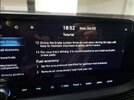
Using anything other than the oem pn's could be interpreted as "modification" as well. But in our case, the i20n "tutorial" section in the infotainment is stating track exclusive brake pads should be used when driving on the track.

In some countries doing anything at all outside the authorized dealerships will void warranty, including routine maintenance even if you can provide documentation proving everything was done according to spec. I've heard stories where people were denied totally unrelated system failures (infotainment, door locks, gearbox, you name it) under warranty just because they replaced their own oil and filter and did not pay the dealership (aka stealership).

Meanwhile in countries like USA and Australia it seems to be a non issue. Though that doesn't mean warranty claims are easy there either. Hyundai and vag group has been notoriously terrible at keeping their warranty promises.

P.s. Sorry for the long and slightly out of topic post.
 

Attachments

  • Screenshot_20260624_203330_Photos~2.jpg
    Screenshot_20260624_203330_Photos~2.jpg
    232.6 KB · Views: 20
  • Like
Reactions: Jerome92
I was more thinking to the entire brake system... maybe some aftermarket brake pads could lock the caliper or do some damage. I was thinking they might deny some other brake related parts warranty if you use non OE parts.
 
I was more thinking to the entire brake system... maybe some aftermarket brake pads could lock the caliper or do some damage. I was thinking they might deny some other brake related parts warranty if you use non OE parts.
When it comes to warranty claim denials, they will use anything and everything possible. So yes i believe your argument could be used against. But this could be fought back using the statement in the infotainment. To the best of my knowledge, Hyundai does not offer an oem "track exclusive" pad option for the i20n. Which technically means their statement is actually recommending an aftermarket brake pad.
 
My pmu hc+ has finally arrived from RHD Japan. However I noticed the friction material is not exactly centered on the backing plate, according to my not so accurate measurements, there is around 0.85mm misalignment (closer or further from the long edge) between pairs. I was able to match 2 pairs more or less spot on so as long as they don't ride on the slight lip I have on my rotors, I believe I should be good.

I've only used/installed trw and ferodo street pads before on my other cars and never encountered anything like this.

I also noticed there are no holes on the backing plates to accept pad return springs.
Will they work ok without the retrun springs installed? I would be glad if someone with more experience can confirm before i install.
 
Hmm I don't think so, these springs will bring a little tension on pads toward the center of discs. Without these, I imagine they will rattle.

Try it out, pads are changed that quick on the i20N.
 
I have also just received a set of PMU HC+ from them because I am planning a brake upgrade with several components this autumn. Part of the reason is that the MX72+ became rather noisy while the deposits on the discs were clearing up.

I have checked mine and maybe yes there is a slight difference pad to pad, but honestly I have never checked my other pad sets in such detail and I am not sure this is a thing only of PMU.
I confirm there are no holes for the return springs. I wasn't aware of this and this is the first set of pads for the i20N that I see without holes. Now these springs are not strictly needed as on road cars the return of the pistons is ensured by the deformation of the internal seal, however as mentioned by i_twenty_N they might rattle a bit.
I will still install them, PMU is a serious manufacturer, but would be annoying to discover they won't be as quiet as they could because they skipped such a small processing step...

 
Hmm I don't think so, these springs will bring a little tension on pads toward the center of discs. Without these, I imagine they will rattle.

Try it out, pads are changed that quick on the i20N.
I see, from the installation videos I saw, It looked like they were for distancing the pads from the rotor when the brakes are released. But yes looks like they also apply pressure towards the rotor center when the caliper is closed on them.

On that axis we also have the backing plate tabs that go on the channels with the pad retainers. If those have some spring action in them, that might be sufficient to prevent some rattles.

My main concern was, how the pads would distance themselves from the rotor when brakes are released without the return springs.
 
  • Like
Reactions: Jerome92
I have also just received a set of PMU HC+ from them because I am planning a brake upgrade with several components this autumn. Part of the reason is that the MX72+ became rather noisy while the deposits on the discs were clearing up.

I have checked mine and maybe yes there is a slight difference pad to pad, but honestly I have never checked my other pad sets in such detail and I am not sure this is a thing only of PMU.
I confirm there are no holes for the return springs. I wasn't aware of this and this is the first set of pads for the i20N that I see without holes. Now these springs are not strictly needed as on road cars the return of the pistons is ensured by the deformation of the internal seal, however as mentioned by i_twenty_N they might rattle a bit.
I will still install them, PMU is a serious manufacturer, but would be annoying to discover they won't be as quiet as they could because they skipped such a small processing step...
Thanks for the confirmation.

I briefly considered to install the springs resting them against the empty flat surface at the edge of the backing plates on the pad material side. That would probably cause them to rest at the corner where the backing plate tabs meet the caliper bracket with the retainers. Probably not a good idea.

I will also install as is first and see how it goes. If too bad, then i might try drilling the backing plates. It shouldn't be too difficult to drill those holes given access to the right equipment.

P.s meanwhile, I was searching for titanium shims for better insulating the caliper piston. Came to the conclusion that i might as well draw my own template and have them cut from 0.5mm grade 5 titanium sheet for much cheaper. I have access to 1000x200mm 0.5mm thick grade 5 titanium sheet for around 210 USD. +Laser cutting expenses.
 
  • Like
Reactions: Jerome92
If you think about doing titanium plates I would happily buy a set from you 😁

One of the things I recently bought are actually the Ferodo anti-noise rubber shims that (I think) you mentioned. I bought them from Gt2i. I preferred them to the PMU ones as those have metal inside and since I am not well equipped with cutting metal tools I am afraid of making a messy job and bend the plates: same reason why I though about fabricating the titanium plates (here it is not absurdly expensive) but then chickened out...

Anyway those rubber shims might be even more useful considering the PMU pads won't run with the return springs.
 
  • Like
Reactions: _LAH_
I'll keep that in mind if i ever get to do it =)
All the commercially made shims I saw installed seem to be cut a little smaller than the back plate in the exact same flat shape. This way they won't slide up or down since they also go into the same slots on the caliper bracket together with the pads. Being smaller than the pad, there is less chance of unwanted interference. I will attempt to design something similar when I have the time, having said that, i like the adhesive design better but again, heat... I already traced the backing plate, need to import it to CAD now. I hope I can get it right the first time.

I don't think the rubber shims will hold up to the heat for long, but nothing to loose trying.

One way you can cut thin metal without damaging is to have it sandwiched between two sacrificial wooden (or similar material) plates and cut them all together. But beware, titanium is difficult to work with and the tools will have a hard time cutting it.

I think the best option is to use a commercial laser cutting service. It's not too expensive, I've used it for cutting pieces for my other projects (think 25mm thick carbon steel) it was reasonably priced and fast.

The titanium sheet you found looks great and similarly priced with what i found, only in the right size =) It is a little thicker than I would like but I guess it will fit since we need only one at the piston side. Just keep in mind, we need titanium grade 5 (the link you sent is grade 5 also). Pure titanium (grades 1-4) have significantly higher heat conductivity.
 
  • Like
Reactions: Jerome92