
-
Welcome to N-cars.net - the largest Hyundai N car forum. Check out the model specific sections below and scroll down for country specific forums. Scroll down for i30 N, Ioniq 5 N, i20 N, Veloster N and Kona N forums! Check out the i30 N Bible Here!
Engine Oil thread
- Thread starter Y0UKN0WITSCHRIS
- Start date
You are using an out of date browser. It may not display this or other websites correctly.
You should upgrade or use an alternative browser.
You should upgrade or use an alternative browser.


I believe it’s Quaker state synthetic that’s what they recommend and what most dealers stock for people who request syntheticWhat are the dealerships using for oil in our cars in north america? Not seeing the Shell Helix Ultra mentioned in I30 threads.

05100-00171 - 1L bottle of Mega Turbo Syn 0W-30 (API SN, ACEA C2)
05100-00471 - 4L bottle of Mega Turbo Syn 0W-30 (API SN, ACEA C2)
Those are the OE engine oil (manufactured by either Shell or SK), and they're pretty good. Also, they're pretty cheap in Korea($25/4L), so I always use them. The following is the google translation of a random Russian post(Russians are kinda obsessive about engine oil for obvious reasons).
05100-00471 - 4L bottle of Mega Turbo Syn 0W-30 (API SN, ACEA C2)
Those are the OE engine oil (manufactured by either Shell or SK), and they're pretty good. Also, they're pretty cheap in Korea($25/4L), so I always use them. The following is the google translation of a random Russian post(Russians are kinda obsessive about engine oil for obvious reasons).
Oil is declared as: API SN; ACEA C2; OEM KIA 05100-00171.
1) The oil fully complies with the SAE standard and can be called 0W-30. Viscosity at 100 ° C and CCS at -35 ° C are part of the standard requirements.
2) First of all, viscosity at 40C = 43.38 immediately catches the eye - “this does not happen ?!” After all, this is the viscosity of most 0W-20. This means that despite the fact that it is "thirty", it will be economical as 0W-20, namely, when you start the morning and warm up to operating temperature. Secondly, it is a kind of record oil among 0W-30 - it fully deserves the title "Miss Fuel Economy" in the top of the ideal oils of the Oil Club
3) Viscosity at 100 ° C = 10.69 - and here, the oil behaves like a "thirty" - has the desired viscosity.
4) Thanks to such special viscosity characteristics, see what its viscosity index is = 248 CARL! The oil works in the widest range of temperatures, it behaves as a low-viscosity 0W-20 when it is not heated, and at the same time at the working temperature, it behaves like 0W-30.
5) Alkaline number = 8.3 - despite the fact that this is the ACEA C2 standard, limiting the ash, where you can’t jump above the head and you will no longer add alkaline. So, in spite of this, the base number of 8.3 is quite high for the middle pit.
6) Acid number = 2.0 - tall, there is a chance that the oil will work faster than ordinary oils, on simpler packages, but I think - without crime.
7) Sulfate ash level = 0.87 - and the ACEA C2 standard clearly defines - no more than 0.8. Therefore, there is an excess of ash. Although such small excesses, in a good mind and sound memory, hardly anyone will find fault, because here the laboratory can inflate and the manufacturer to overdo it with the percentage of additive package. These are little things ...
8) Flash point = 238С - are we just talking about low viscosity "almost 0W-20"?I still do not know from what bases this oil is made, but it is extremely thermostable at high temperatures!
9) NOACK - evaporation of masses (waste) = 10 - class! Not many 5W-30 can boast such a PLA, and here low-viscosity 0W-30 and such a result!Excellent behavior of oil at high temperatures and low consumption for waste.
10) The pour point -46C is the norm.
11) The viscosity of simulating cold scrolling with a starter at -35С = 6050 mPas is located at the upper limit of SAE. Enters the standard. Just a little bit more and it will be 5W-30. In general, this value ensures a safe start up to -35C, below it is clear not a record holder. The manufacturer specifically selected the recipe, the maximum base oil, the maximum thermal stability, and not to the detriment of low-temperature properties - which are usually less in demand.
12) Sulfur content = 0.331 - it is higher than the usual mid-ash table, because here the “fat” additive package. It is clear that base oils are pure sulfur, it is more of additives.
13) Judging by the level of additive elements, the development of Infineum + a separate friction modifier package based on organic molybdenum is used. Third-party he (Vanderbilt Molyvan) or his own, is a subject for discussion. (I can be mistaken if something corrected over time).
14) A very high content of molybdenum - it just adds a fuel saving function. It also has anti-wear function, while reducing oil viscosity, heavy loads, and even regular lapping of parts from the conveyor.
15) ZDDP anti - wear additives - phosphorus and zinc. Calcium-based detergent additives. Boron is an ashless dispersant.
16) In addition to all this, by oxidation = 31, one can say that the oil contains esters. Esters give the oil polar properties, reduce wear, reduce friction. The Fourier transform infrared spectrum also indicates that the oil contains esters.
Conclusion: Advanced auto industry oil, unlike any oil. Sharpened for record-breaking fuel efficiency. Due to its low viscosity on cold, molybdenum, esters - it will save fuel. At the same time due to ZDDP , molybdenum, esters protects the engine from wear. The oil has very good high-temperature characteristics (low NOACK and high flash) - even though it is of low viscosity, it is a rare feature for low viscosity oils. Low temperature characteristics are normal - they satisfy the viscosity class 0W-30. This oil can be recommended to owners of Korean, Japanese cars, where low viscosity oils are recommended. It is safe for direct injection, particulate filters and modern catalysts. Thanks to him, you get a record fuel economy and engine efficiency. Definitely it can be said that it is worth the money.
I am in Canada and when I went to get an oil change I requested 0w30. They told me there was an email from Hyundai Canada stating that all turbo cars including 1.6t and 2.0t should be getting 5w40 full synthetic. That's what they gave me. I'm not sure if this was sent out before or after the Veloster N was released.


Amsoil sso is what I've been using in a naturally aspirated honda. 10w-30 in summer and 5w-30 for winter. For this theta though I'm considering something more toward a C3 rated euro 0/5w-30. Still comparing them but M1 ESP, Castrol Edge C3, Penn Plat Euro L and Total Quartz Ineo are first ones to come up for me.
Last edited:
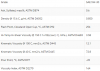
The M1 ESP is looking pretty well rounded. Low ash, high ht/hs and flash point, not an overabundance of viscosity improvers to potentially shear and the viscosity at operating temp is near the upper end of 30 weights, leaves a little room for dilution before falling out of grade (if it even would). It doesn't show here but i believe the noack is also under 7%.
Mobil 1 has a history of producing turbo failures on the VT.
AMSOIL SS is all you need. Their updated formulas (0W-20 & 5W-30) scored at the top of the 540RAT wear resistance rankings. Low volatility and are SN+ (anti-LSPI).
AMSOIL SS is all you need. Their updated formulas (0W-20 & 5W-30) scored at the top of the 540RAT wear resistance rankings. Low volatility and are SN+ (anti-LSPI).

Oil dummy here. I live in a hot state (1 or 2 weeks a year below freezing) and plan to autocross and do a few track days. What's good to use year-around?
After proper engine break-in, AMSOIL Signature Series 0W-20, 5W-20 or 5W-30. If you want something locally bought in a store, Quaker State Ultimate Durability (same grades).

Thanks. Considering I'm already at 1000 miles and haven't ordered oil or filter, I'll try to get it to the dealer today if possible. After that, I'm not sure about spending the extra money for AMSOIL over store-bought, but it is pennies in the grand scheme. Is their website the only way to get it?After proper engine break-in, AMSOIL Signature Series 0W-20, 5W-20 or 5W-30. If you want something locally bought in a store, Quaker State Ultimate Durability (same grades).
Quaker State because it's better than Penn Ultra or Castrol Edge or because Hyundai recommends it?
Just go to any Hyundai dealer and buy a filter.. it’s literally the same one they use on 90% of their models. And if you didn’t read earlier post I’ll be running ultra platinum in my car. I ran plantnium in my VT and put 50k hard miles on her and never had an issue. Just FYIThanks. Considering I'm already at 1000 miles and haven't ordered oil or filter, I'll try to get it to the dealer today if possible. After that, I'm not sure about spending the extra money for AMSOIL over store-bought, but it is pennies in the grand scheme. Is their website the only way to get it?
Quaker State because it's better than Penn Ultra or Castrol Edge or because Hyundai recommends it?
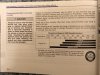
It gives you a typical chart of what you should run for varying degreesWhats in the manual? Does it say 0w-30 5w-30 or 5w-40 for all temps or does it make no mention of 40?
The system here at my local dealer recommended 0w-30 for my car so it’s odd if they’re saying 5w-40 in Canada.

My owners manual recommends 0W-30, doesn’t mention any other grade.Whats in the manual? Does it say 0w-30 5w-30 or 5w-40 for all temps or does it make no mention of 40?
There is not an oil pressure gauge only temp and I think most people are getting the factories oils out ASAPSounds like the factory fill is a midweight 0w-30. Anyone put a good number of miles on yet and is the oil pressure gauge ever lower than you'd like to see?