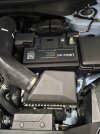
Yesterday I returned to the U.K. after five weeks abroad. Unfortunately, when I attempted to drive my i20N (it’s done just 2,300 miles) I found the battery was completely dead. So I managed to get into the car with the manual key and pop the bonnet. A nice man from the RAC then put a small amount of charge in the battery and ran some checks - turns out the alternator is working and the battery is also receiving charge - so I drove the car home and all has been good. Now I know it has been very, very cold these last weeks but I still wouldn’t expect a new car battery to lose all of its charge! As a result, I’m tempted to replace the battery with something better - any suggestions (or general thoughts)?

-
Welcome to N-cars.net - the largest Hyundai N car forum. Check out the model specific sections below and scroll down for country specific forums. Scroll down for i30 N, Ioniq 5 N, i20 N, Veloster N and Kona N forums! Check out the i30 N Bible Here!
Battery options?
- Thread starter YNWaN
- Start date
You are using an out of date browser. It may not display this or other websites correctly.
You should upgrade or use an alternative browser.
You should upgrade or use an alternative browser.

Which one exactly?Ive got a Lithiumax battery ready to put in. Just need to do some tinkering to get it in nice. Heaps lighter.
Not easily unfortunately. Apparently there is a disconnect switch in the fuse box that I should have flipped and this would have reduced the standing drain on the battery significantly.Any way you can leave it on a trickle charger/battery tender while you're away?
I'm pretty sure i20N models are all fitted as standard with a 70Ah AGM battery, as much as anything because the car has a Start/Stop capability. It is universally advised that - when a car's original battery is AGM type - any replacement battery MUST also be AGM type. Replacing the factory-fitted battery with a new higher capacity AGM battery should mean that battery would 'last longer' before its charge-state has dropped to the point when the car won't start, but the space available where the original battery is housed in an i20N will almost certainly prevent a dimensionally larger battery being fitted.
The parasitic drain on the starter-battery of modern cars can be surprisingly high. Even if an i20N had a brand-new top-class AGM battery that was 100% charged, it wouldn't surprise me if - after the car had been locked and then stood idle for 5 weeks - it would refuse to start. And, if the battery is not new and not top-class and not fully charged when the car is put into hibernation, the battery's capability to start the car could have disappeared much earlier.
This i30N forum thread may be worth reading
https://n-cars.net/forums/threads/battery-problems.6077/
and there are plenty more on-line complaints (not just relating to Hyundai vehicles) about parasitic drain rapidly flattening the batteries on modern cars.
There are also on-line warnings about replacing a car's original starter-battery ('ordinary wet-acid', EFB or AGM) with a lithium type. (Example here)
https://www.eco-worthy.com/blogs/lithium-battery/can-lithium-battery-be-used-as-start-battery
Nowadays specialised lithium 'starter' batteries are being marketed and their light weight makes them popular for motorsport applications. However, if a wet-acid-to-lithium upgrade route were to be followed, there is a real risk that the battery management system Hyundai has designed for an i20N and that will have been optimised for a conventional battery will not be comfortable with the different technology of a lithium battery.
The parasitic drain on the starter-battery of modern cars can be surprisingly high. Even if an i20N had a brand-new top-class AGM battery that was 100% charged, it wouldn't surprise me if - after the car had been locked and then stood idle for 5 weeks - it would refuse to start. And, if the battery is not new and not top-class and not fully charged when the car is put into hibernation, the battery's capability to start the car could have disappeared much earlier.
This i30N forum thread may be worth reading
https://n-cars.net/forums/threads/battery-problems.6077/
and there are plenty more on-line complaints (not just relating to Hyundai vehicles) about parasitic drain rapidly flattening the batteries on modern cars.
There are also on-line warnings about replacing a car's original starter-battery ('ordinary wet-acid', EFB or AGM) with a lithium type. (Example here)
https://www.eco-worthy.com/blogs/lithium-battery/can-lithium-battery-be-used-as-start-battery
Nowadays specialised lithium 'starter' batteries are being marketed and their light weight makes them popular for motorsport applications. However, if a wet-acid-to-lithium upgrade route were to be followed, there is a real risk that the battery management system Hyundai has designed for an i20N and that will have been optimised for a conventional battery will not be comfortable with the different technology of a lithium battery.


This April 2022 forum thread discussed i20N cars being unused for long periods.
https://n-cars.net/forums/threads/i20n-long-storage-options.7591/
It was advised that "Normally, Hyundai puts a switch in the middle of the fuse panel", but there is no mention of this in the i20N Owner Manual, nor any indication within the Manual's information/diagrams relating to the fuse box(es) that such a switch might be present.
Hyundai's advice is simply to disconnect the starter-battery, but (obviously) doing this means that the car's alarm system will be inoperative during the period the car is out of use.
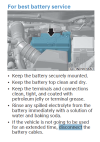
Hyundai is clearly uncomfortable with charging starter-batteries in situ (discussed here)
https://n-cars.net/forums/threads/smart-battery-chargers-and-the-i30n.7008/
and, of course, if a battery-charger is to be used, it will need to be connected to a mains power-supply.
https://n-cars.net/forums/threads/i20n-long-storage-options.7591/
It was advised that "Normally, Hyundai puts a switch in the middle of the fuse panel", but there is no mention of this in the i20N Owner Manual, nor any indication within the Manual's information/diagrams relating to the fuse box(es) that such a switch might be present.
Hyundai's advice is simply to disconnect the starter-battery, but (obviously) doing this means that the car's alarm system will be inoperative during the period the car is out of use.
Hyundai is clearly uncomfortable with charging starter-batteries in situ (discussed here)
https://n-cars.net/forums/threads/smart-battery-chargers-and-the-i30n.7008/
and, of course, if a battery-charger is to be used, it will need to be connected to a mains power-supply.

If there's no switch, you can install one in 5mins for 10 gold coins from amaz/bay, tis pretty neat.

If there's no switch, you can install one in 5mins for 10 gold coins from amaz/bay, tis pretty neat.
View attachment 21986
that seems an eminently sensible solution!
OK in principle, though it might be trickier to install on an i20N as there is a lot of 'stuff' on the cable that connects to the battery's negative terminal where that type of simple isolator should go (photo of my i20's negative terminal here, with battery-charger lead attached to it).
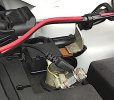
It's stating the obvious, but once the battery has been 'isolated' the car's alarm system won't be operative. Fine if the car is securely garaged: not so good if it's parked in the open.
If one were regularly leaving the car unused for long periods, fitting a battery isolator (and there are plenty of different sorts) would make good sense. If the car is to be left unused infrequently, disconnecting the negative terminal's cable would do the same job.
It's stating the obvious, but once the battery has been 'isolated' the car's alarm system won't be operative. Fine if the car is securely garaged: not so good if it's parked in the open.
If one were regularly leaving the car unused for long periods, fitting a battery isolator (and there are plenty of different sorts) would make good sense. If the car is to be left unused infrequently, disconnecting the negative terminal's cable would do the same job.

That's the price you pay for escaping all the miserable weather the rest of us have have endured over the past 5 weeks...... Undoubtedly a price worth paying!Yesterday I returned to the U.K. after five weeks abroad. Unfortunately, when I attempted to drive my i20N (it’s done just 2,300 miles) I found the battery was completely dead. So I managed to get into the car with the manual key and pop the bonnet. A nice man from the RAC then put a small amount of charge in the battery and ran some checks - turns out the alternator is working and the battery is also receiving charge - so I drove the car home and all has been good. Now I know it has been very, very cold these last weeks but I still wouldn’t expect a new car battery to lose all of its charge! As a result, I’m tempted to replace the battery with something better - any suggestions (or general thoughts)?
I20N battery is not AGM.
Normal lead acid battery
Normal lead acid battery
12v 60Ah 640A Car Battery
Thanks for the confirmation
On July 31 2022 I sought details of the starter-battery fitted as standard to i20N models
https://n-cars.net/forums/threads/i20n-battery-standard-specification.8354/
I asked
Please could anyone confirm what 12V battery is fitted as standard to UK-specification i20N cars? I’d like to know the battery’s dimensions (particularly the length), capacity (Ah) and type ('conventional’ or AGM) and - if possible - the manufacturer.
I thought this would be simple to answer, but no reply was forthcoming until now.
I assume the battery is Type 027 size-wise (L242 x W175 x H190mm). EFB and AGM 027 size batteries are fairly readily available, but their Ah and CCA statistics are similar to 60Ah/640A.
An Exide EL600 EFB battery should be an uncontroversial replacement option if an i20N owner were exploiting Start/Stop a lot, but the car would still need to be driven regularly over a reasonable distance to ensure the battery did not become seriously discharged.
On July 31 2022 I sought details of the starter-battery fitted as standard to i20N models
https://n-cars.net/forums/threads/i20n-battery-standard-specification.8354/
I asked
Please could anyone confirm what 12V battery is fitted as standard to UK-specification i20N cars? I’d like to know the battery’s dimensions (particularly the length), capacity (Ah) and type ('conventional’ or AGM) and - if possible - the manufacturer.
I thought this would be simple to answer, but no reply was forthcoming until now.
I assume the battery is Type 027 size-wise (L242 x W175 x H190mm). EFB and AGM 027 size batteries are fairly readily available, but their Ah and CCA statistics are similar to 60Ah/640A.
An Exide EL600 EFB battery should be an uncontroversial replacement option if an i20N owner were exploiting Start/Stop a lot, but the car would still need to be driven regularly over a reasonable distance to ensure the battery did not become seriously discharged.
Measuring it in situ (not perfect) I ‘d say your dimensions are right and yes it is 60/640. Turkish manufacturer no doubt for local content rules. Unbranded as far as I can see.Thanks for the confirmation
On July 31 2022 I sought details of the starter-battery fitted as standard to i20N models
https://n-cars.net/forums/threads/i20n-battery-standard-specification.8354/
I asked
Please could anyone confirm what 12V battery is fitted as standard to UK-specification i20N cars? I’d like to know the battery’s dimensions (particularly the length), capacity (Ah) and type ('conventional’ or AGM) and - if possible - the manufacturer.
I thought this would be simple to answer, but no reply was forthcoming until now.
I assume the battery is Type 027 size-wise (L242 x W175 x H190mm). EFB and AGM 027 size batteries are fairly readily available, but their Ah and CCA statistics are similar to 60Ah/640A.
An Exide EL600 EFB battery should be an uncontroversial replacement option if an i20N owner were exploiting Start/Stop a lot, but the car would still need to be driven regularly over a reasonable distance to ensure the battery did not become seriously discharged.
The i20N's standard battery will almost certainly have been made in Turkey in the Yigit Aku factory at Ankara.
https://www.yigitaku.com/?lang=en
Yigit Aku's technical tables show no 027/L2 size (L242 x W175 x H190mm) battery that exactly matches the 60Ah/640A values, which suggests that the i20N battery may be produced under a Hyundai contract.
The battery in my 2021 i20 is L1-size (207mm long not 242mm) but is otherwise visually the same as the i20N's battery (i20N photo here)
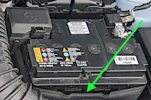
As with the i20N battery, my car's battery carries no marking on its upper surface to identify its manufacturer. However, if the insulating cover that surrounds the battery is pulled forward at the front (green arrow on photo) I believe you'll find a label with "YigitAku" on it. (My battery's exact specification also does not exactly match anything in the Yigit Aku technical tables.)
https://www.yigitaku.com/?lang=en
Yigit Aku's technical tables show no 027/L2 size (L242 x W175 x H190mm) battery that exactly matches the 60Ah/640A values, which suggests that the i20N battery may be produced under a Hyundai contract.
The battery in my 2021 i20 is L1-size (207mm long not 242mm) but is otherwise visually the same as the i20N's battery (i20N photo here)
As with the i20N battery, my car's battery carries no marking on its upper surface to identify its manufacturer. However, if the insulating cover that surrounds the battery is pulled forward at the front (green arrow on photo) I believe you'll find a label with "YigitAku" on it. (My battery's exact specification also does not exactly match anything in the Yigit Aku technical tables.)
D'oh, I've been labouring under the delusion that it was an AGM battery. My situation involves lots of short trips, and the idle stop and go (ISG) hadn't kicked in for a while. I don't generally like ISG, but I could see it as a canary in the coal mine, indicating the battery had low voltage. Checking with a multi-meter, it was below 12V. I have a CTEK charger that has an AGM mode, and due to the car manual mentioning AGM (but not specifically saying the battery was AGM), I have been using the AGM mode on the charger, but still couldn't get the ISG to kick in. I then used the AGM + recondition mode, which is supposed to restore the battery to a degree, but then saw some feedback on a forum from CTEK saying you shouldn't use this mode combination (even though you can select it), so I stopped it half way through. Next day, lo and behold, the ISG started to work again, so it fixed something. But still I wasn't sure if this was an AGM battery, the Century battery website seemed to indicate the OEM battery is AGM, so you have to replace with the same.I20N battery is not AGM.
Normal lead acid battery
12v 60Ah 640A Car Battery
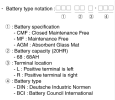
Turns out the answer was staring me in the face from the start. The battery model printed on it is CMF60L-DIN, which turns out to stand for Closed Maintenance Free. AGM models have AGM at the start of the code. Ah well lesson learned.
Hyundai i30 PD online owners manuals, service guides and wiring diagrams
Hyundai i30 PD manuals – owner's guides, service manuals, repair instructions, maintenance information and full wiring diagrams available online.
Last edited:

Hi all,
i also had some issues with the battery on my i20N in the cold times when it happens that i don't drive the car for some weeks. I did some research on that as i was not completly satisfied with the answer from the Hyundai Dealer that everything is ok. They were very friendly and helpful to do a check of the alternator!.
It's like this:
The i20N have not only a BMS (Battery Management System) there is also a AMS (Alternator Management System) which controls the power output from the alternator and the SOC & SOH of the battery.
Indeed the OEM Battery is a kind of AGM Type.
The AMS try to keep the Charging State of the battery between approx. 60% and 90%.
(As the AGM is designed for more cycles and is able to load and unload with a higher current compared to normal lead acid, as a prerequisite for ISG).
I've done some measerment to check the behavior of the AMS and i found out that if the battery is above approx. 70% of SOC the alternator is not generating power when you are under normal driving conditions (accelerator is engaded). When you go off the throttle and using the brake momentum from the engine the alternator came to life and delivers a high amount of charging current. If you accelerate the alternator is switched off again.
In case that the SOC will drop under approx. 60-70% the AMS provide continuously power until the SOC is back to around 90%.
If there is a high amount of current needed (as example: headlight on, window heating, etc..) the alternator will also deliver continuously the needed power and charge the battery or even will not discharge it.
As notice the ISG is also a part of the strategy and will also work only if the SOC is within these parameters.
All functions are interconnected and coherent controled by the ECU any many more parameters then i know.
I think the cause why the the car is doing so is simply to safe gasoline.
So what is my conclusion of that exercise:
It's not like older cars, if you drive 30-40km your battery isn't fully recharged!
If you want to charge your battery while driving, turn on headlight.
If the car is parked for a longer time, recharge your battery every 2 weeks, or disconnect the battery when you have a safe place as there is no central locking and burglar alarm.
Everything of this is based on my observation with my german spec. i20N.
I hope this will help you to understand the way the battery charging works on our i20N .
.
Best regards
Alexander
i also had some issues with the battery on my i20N in the cold times when it happens that i don't drive the car for some weeks. I did some research on that as i was not completly satisfied with the answer from the Hyundai Dealer that everything is ok. They were very friendly and helpful to do a check of the alternator!.
It's like this:
The i20N have not only a BMS (Battery Management System) there is also a AMS (Alternator Management System) which controls the power output from the alternator and the SOC & SOH of the battery.
Indeed the OEM Battery is a kind of AGM Type.
The AMS try to keep the Charging State of the battery between approx. 60% and 90%.
(As the AGM is designed for more cycles and is able to load and unload with a higher current compared to normal lead acid, as a prerequisite for ISG).
I've done some measerment to check the behavior of the AMS and i found out that if the battery is above approx. 70% of SOC the alternator is not generating power when you are under normal driving conditions (accelerator is engaded). When you go off the throttle and using the brake momentum from the engine the alternator came to life and delivers a high amount of charging current. If you accelerate the alternator is switched off again.
In case that the SOC will drop under approx. 60-70% the AMS provide continuously power until the SOC is back to around 90%.
If there is a high amount of current needed (as example: headlight on, window heating, etc..) the alternator will also deliver continuously the needed power and charge the battery or even will not discharge it.
As notice the ISG is also a part of the strategy and will also work only if the SOC is within these parameters.
All functions are interconnected and coherent controled by the ECU any many more parameters then i know.
I think the cause why the the car is doing so is simply to safe gasoline.
So what is my conclusion of that exercise:
It's not like older cars, if you drive 30-40km your battery isn't fully recharged!
If you want to charge your battery while driving, turn on headlight.
If the car is parked for a longer time, recharge your battery every 2 weeks, or disconnect the battery when you have a safe place as there is no central locking and burglar alarm.
Everything of this is based on my observation with my german spec. i20N.
I hope this will help you to understand the way the battery charging works on our i20N
.Best regards
Alexander
Apologies on late reply !
Lithiumax restart 10.

 www.lithiumax.com.au
Bought this for weight savings.
www.lithiumax.com.au
Bought this for weight savings.
Can agree with above post also as i have confirmed the same thing with alternator charge watching the battery app whilst driving. To get battery to 100% just put the headlights on for a while.
Being an expensive battery i didn't want it getting to low and damaging it. Headlight trick works great.
Lithiumax restart 10.
Lithiumax Gen4 RESTART10 Bluetooth in 40Ah or 60Ah Lithium (80Ah or 120Ah PbEq) | Lithiumax Batteries
The new State-of-the-Art Gen4 LITHIUMAX RESTART10 Bluetooth engine starter battery. The Lithiumax RESTART10 Bluetooth is the ultimate H6 (DIN H6, Group 48, EN 66L3, BCI98R) or T5 (L2) battery available anywhere at any price. After a year of specific model development and decade of award winning...
www.lithiumax.com.au
Can agree with above post also as i have confirmed the same thing with alternator charge watching the battery app whilst driving. To get battery to 100% just put the headlights on for a while.
Being an expensive battery i didn't want it getting to low and damaging it. Headlight trick works great.
Attachments