• Welcome to N-cars.net - the largest Hyundai N car forum. Check out the model specific sections below and scroll down for country specific forums. Scroll down for i30 N, Ioniq 5 N, i20 N, Veloster N and Kona N forums! Check out the i30 N Bible Here!

Engine Oil Catch Cans

Lots of stop start city driving would make things worse though, not better, right?

Although very regular seriously hard flogging would also.

But over all, that’s pretty encouraging, as it’s similar to the other post which showed little in the catch can after several thousand km as well!
 
I recently emptied my front catch can (the one that goes to the intake manifold) after about 15k KM. there was only about 75-100mL of oil in there, and a little bit of milky residue (moisture). Not bad considering I've been running 280+whp for over 6 months and beating the crap out of the car lol.

Guess I broke it in correctly :)
 
Hi all,
this is my catch can level after 1460 Km. Half on highway and the rest on city. Have done some pulls with 2nd and 3rd to see how it goes. The catch can size is the usual epman dimensions.
Seems good ?IMG_20190815_132535.jpg
 
Last edited by a moderator:
  • Like
Reactions: Stash-N
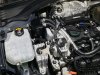
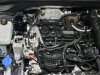
This is my car with oil catch can
 

Attachments

  • WhatsApp Image 2019-09-19 at 00.01.37(1).jpeg
    WhatsApp Image 2019-09-19 at 00.01.37(1).jpeg
    175.8 KB · Views: 160
  • WhatsApp Image 2019-09-19 at 00.01.37(2).jpeg
    WhatsApp Image 2019-09-19 at 00.01.37(2).jpeg
    248.1 KB · Views: 163
  • WhatsApp Image 2019-09-19 at 00.01.37(3).jpeg
    WhatsApp Image 2019-09-19 at 00.01.37(3).jpeg
    272.2 KB · Views: 160
  • WhatsApp Image 2019-09-19 at 00.01.37.jpeg
    WhatsApp Image 2019-09-19 at 00.01.37.jpeg
    206.1 KB · Views: 151
At 2.222 Km, a lot lower temps than the previous picture (hot August) and daily city drive - very low mileage per day.

IMG_20191110_140032.jpg
 
  • Like
Reactions: Davo01
I'm sure it would look better after 80k with a catch can installed but am curious what kind of improvement we're talking. 10%? 80%?
 
Honestly, the VAG engine have more than 3.5% fuel/oil dilution, which is bad but not as bad as Honda GDI's. So, it would behove any VAG owner to install a CC. Honda's definately both sides.

Improvement, maybe 25% on the VAG, the Honda with both cans, near the same. The blowby on both engines are bad
 
I would guess premium fuel with more cleaners/additives would also reduce the carbon deposits?

Just did a quick google search and found this.
 
In retrospect, a bit of fuel does move over the valves but it's in the form of oil/fuel vapor, recycled from the emissions system which initially causes the problem. However, there is no steady stream of injected fuel that washes over the intake valves, as in a port injected engine.:(

Most fuel additives will not help with the intake valves. However, such treatments will keep the injectors and exhaust valves clean. A direct reduction in blowby, (oli/fuel/water vapor) via a CC and a sharp reduction in stop and go traffic and short trips will do the most good. Along with this, hard acceleration to speed limits on at regular intervals, will help reduce the carbon deposits.:)

There are some engine treatments like; Cerma, which will combine a nano molecular barrier to metal and form a barrier coating on intake valves and other internal engine parts. This will aid in reducing carbon from sticking to the intake valves. A BG FI/engine treatment every 15K miles, will further aid in the removal of carbon on intake valves as well.:)

It's the best we have to combat GDI issues. Besides, I enjoy a good romp on the throttle to blow out the cobwebs.:p
 
  • Like
Reactions: Davo01
Had a few issues with misfire on my s3. Ended up with hydro carbon clean and a cleaner through the fuel. No further issues. Not an expert but I believe it helped