• Welcome to N-cars.net - the largest Hyundai N car forum. Check out the model specific sections below and scroll down for country specific forums. Scroll down for i30 N, Ioniq 5 N, i20 N, Veloster N and Kona N forums! Check out the i30 N Bible Here!
Dan,

I am not sure where Airtec gets their cores from but they are headquartered in the UK just like Forge is. I bet Airtec is their major competition?... I spoke to Ryan at Airtec and he said that he has the oil coolers in stock but they'd have to build me the inter-cooler. IDK, if that means just welding on end tanks or not? A lot of people use Airtec.... Not saying it is better than Forge btw. But it is much less expensive... IDK, this is my 3rd turbo car and I have never paid over 500 bucks for a new inter-cooler, until now. I just can't believe some are 900+. Seems ridiculous. And yes, I know I'm gonna get ripped for stating that. lol... I'm just giving an honest opinion.

Br,

-Mike
 
High oil temperature in excess of 240°F (115°C) will break down petroleum oils and cause oxidation, which in turn forms deposits, varnish and increases wear. So keeping temps in a range of 200-235 degrees is a must in any condition.

This is also consistent with fully synthetic oils
 
If an oil cooler is foolish for a summer only car as a daily then getting only the Airtec FMIC would be almost as much as a Forge unit with all the taxes and shipping costs. SO with that being said, when is Forge going to get one specifically for the VN? I'd really like to buy one....

Br,

-Mike
 
I’ll share a little picture or 2 with you all.

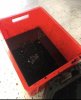
this is my oil after 5000miles with 1 track day with ambient temps of 86f (I’m using a google temperature converter;))

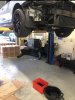
64678E6C-022F-4057-B9D4-D4F03088A536.jpeg6FAA1DD6-2690-4BB4-B772-2FE4A7552D18.jpeg
this was taken when Forge had my car, fitting the oil cooler.
Oil temps reached around 248-257 f on track.

Since having my Forge oil cooler fitted, I’ve not seen temps go above 203 f. Which is where it used to run as I’d drive normally to work without the oil cooler.

I’d say, this is one of the essential mods for your cars health, especially if you are driving hard in high ambient temperatures
 
If an oil cooler is foolish for a summer only car as a daily then getting only the Airtec FMIC would be almost as much as a Forge unit with all the taxes and shipping costs. SO with that being said, when is Forge going to get one specifically for the VN? I'd really like to buy one....

Br,

-Mike
As far as im aware mike, it is as ready as can be, Forge have been on skeleton staff recently due to covid so that probably has something to do with getting them out to you
 
Dan,

I am not sure where Airtec gets their cores from but they are headquartered in the UK just like Forge is. I bet Airtec is their major competition?... I spoke to Ryan at Airtec and he said that he has the oil coolers in stock but they'd have to build me the inter-cooler. IDK, if that means just welding on end tanks or not? A lot of people use Airtec.... Not saying it is better than Forge btw. But it is much less expensive... IDK, this is my 3rd turbo car and I have never paid over 500 bucks for a new inter-cooler, until now. I just can't believe some are 900+. Seems ridiculous. And yes, I know I'm gonna get ripped for stating that. lol... I'm just giving an honest opinion.

Br,

-Mike
And you’re completely entitled mate. They are situated in the uk as a company yeah.
 
Most of the problems occur in extended hard use either in traffic or track type use. Temperatures compound, especially when cooling cycle intervals are not met.

Higher horsepower creates, higher temperatures. Sustained harder use, creates higher engine, coolant and oil temperatures which all contribute to heat soak.

Higher temps in turbo cars cycle differently, than NA cars as well. This is one of the primary issues with turbos. Remember, the turbo is oil and water cooled with the same oil circulated in the engine. The turbo itself, will raise oil temps as it cycles oil around the bearings.

If you sustain lower operating temps, you also reduce heat soak from the engine, maintaining optimal power. I'm not saying anything that hasn't been proven over decades of use and discovery.:)

I believe @TarmoT demonstrated this fairly well in his thread, after his turbo was tore down and the bearing where examined.
As far as iI'm aware Mike, it is as ready as can be, Forge have been on skeleton staff recently due to covid so that probably has something to do with getting them out to you
@Dan_bush27 and the actual bracket for the VN, which we are we are working on now.:) I'll say this as I've said on numerous previous occasions, "patience is a virtue" and some products are worth waiting for.;)

Whatever it takes to get the ,oil cooler available for the VN is being done at the moment. This I can assure you and it will be correct and not shortcut. :)
 
Last edited:
Had airtec stuff before - it's great!
Had Forge stuff before and also installed on the N - it's great!
Nobody will lose whatever they choose.

Maybe, just maybe, it's slowly becoming a buyer's market for modifications for our cars?! 👍
 
this was taken when Forge had my car, fitting the oil cooler.
Oil temps reached around 248-257 f on track.

Since having my Forge oil cooler fitted, I’ve not seen temps go above 203 f. Which is where it used to run as I’d drive normally to work without the oil cooler.

I’d say, this is one of the essential mods for your cars health, especially if you are driving hard in high ambient temperatures
Hello. Did I understand correctly that when driving on a track without an oil cooler, you heated the oil to 125 degrees Celsius, and after setting it, the oil temperature did not rise above 95 degrees?
Were the weather conditions / driving patterns + - equal in these two situations?
It’s just that my teammates and I have been arguing for a long time about the presence of an oil temperature sensor in our cars and if your conditions were + - equal and the oil temperature changed so much in the presence of an oil cooler, then in theory this should indicate that we also have a sensor The dashboard displays the actual temperature, not the calculated one.
 
  • Like
Reactions: NULLOBANDITO
Hello. Did I understand correctly that when driving on a track without an oil cooler, you heated the oil to 125 degrees Celsius, and after setting it, the oil temperature did not rise above 95 degrees?
Were the weather conditions / driving patterns + - equal in these two situations?
It’s just that my teammates and I have been arguing for a long time about the presence of an oil temperature sensor in our cars and if your conditions were + - equal and the oil temperature changed so much in the presence of an oil cooler, then in theory this should indicate that we also have a sensor The dashboard displays the actual temperature, not the calculated one.
Using HP tuners ob2 reader and their software used with Wortec, we were able to read the oil temp on the track day, also indicated in red zone on the dash board during live driving. After oil cooler fitted I’ve driven hard, with probably under more load as I now have hybrid turbo and running an extra 60bhp to the track day, similar ambient temps (maybe 1-2 degree c lower) and again data shows results 👍🏽
 
Using HP tuners ob2 reader and their software used with Wortec, we were able to read the oil temp on the track day, also indicated in red zone on the dash board during live driving. After oil cooler fitted I’ve driven hard, with probably under more load as I now have hybrid turbo and running an extra 60bhp to the track day, similar ambient temps (maybe 1-2 degree c lower) and again data shows results 👍🏽
So, to sum up, we still have a physical sensor that shows the real temperature of the oil, not the calculated one?
 
I sort of remember it. I'll attempt to help find it. :)

The new AeroForce gauges I've got coming, have an add-on sensor that reads it correctly and in real time.
 
I’ve just been on the phone to Paul at Forge and he mentioned for all that are wishing to order a Forge intercooler that will fit the veloster n to email luke@forgemotorsport.com or paul@forgemotorsport.com and they can price you one up and ship one out. This may not be the final product that eventually hits the US as this will come as the cooler without the aero wings. But if you want one right now, to give him an email, you could even be cheeky and see what kind of thing they can do for an intercooler/oil cooler combo. This is by no means jumping in on @R Veloster N ‘s development with forge, but they are aware guys are wanting a Forge intercooler for their VN now
 
I am in contact with 3 different vendors as we speak. All develop their own stuff in-house too so NOTHING comes from China. When I spoke with them they all said they do NOT use $hit from China. I even got pics of guys working on new stuff from one of the vendors, along with pics of their plasma cutters and welding stations.

I will let you all know how it all goes.

Best regards,

-Mike
 
High oil temperature in excess of 240°F (115°C) will break down petroleum oils and cause oxidation, which in turn forms deposits, varnish and increases wear. So keeping temps in a range of 200-235 degrees is a must in any condition.

This is also consistent with fully synthetic oils

Gonna have to respectfully disagree. Not only because of the track experience I have, but the shops I've worked with and many publications have posted the same info, i.e. Hot Rod's article on oil temps or this research on coolant temperatures and using them to estimate oil life.

Most modern synthetic oils can withstand a lot of heat before breaking down, especially a good synthetic from companies like AMSoil, Redline, or Motul.

The team I used to work with tried to maintain oil temps around 240 when on track, but most of time were comfortable with 260.
 
You always have the option to disagree. However, I don't believe you're taking in account all the other factors that come into play.

First off, this is one person's opinion, with no technical data to support it. We're talking about and OEM engine vs a custom built race engine, as referenced in the article. The tolerances are simply that much closer and have to be. There are much higher quality parts utilized, that have much greater heat tolerances and capabilities.
Also, remember that a high-end engine is built as a total combination. Piston-to-wall clearances, piston ring end-gaps, and bearing clearances are specifically tailored to match the engine oil's characteristics and intended operating temperature.
An OEM engine is not! :)

In the second article; it doesn't take in account any high performance use and deals strictly with OBD2 Data logging. As oil is recirculated in the engine thru the turbo time and time again, it loses its viscosity, especially at consistent higher operating temps. With a GDI engine, oil has to deal fuel dilution and contamination, which cause increased thermal viscosity breakdown. This is a know entity and fact, repeated consistently across the internet by; oil manufacturers, OEM manufacturers, high performance engine builders, racers & race teams alike.

Also the second article; is a general overview of OBD2 data logging for; 2011 Buick Regal & 2003 Toyota Camry, and viewpoint under normal driving and controlled conditions, per the experiment and specific to these particular cars. Neither are specific examples of high performance engines and usage, in any way shape of form.

The information was solely derived from the OBD2 diagnostics and not direct sensor to gauge access and input/output. It is not to be utilized as a general overview for high performance cars, in track and continual hard/sever use environments.

Track use engines are maintain well above OEM standards. I know, I raced and maintained both motorcycles and cars in many venues. Engine oil is changed multiple times during the course of one venue, during the engines entire duty or life cycle. Which can be as little as one or two races, before a mandatory or refreshment cycle teardown.
I remember one particular season where we changed oil after every testing and qualifying session, because of ambient conditions and temperatures. It drove sustained racing oil temps well above the 290+ mark and beyond. Without an oil cooler and trans cooler in place, both the engine and transmission would have been fired well before qualifying.
Daily use and racing use, are completely different scenarios. A combination of both is as detrimental to the engine as flat out competition use, unless the engine is being maintained well above OEM standards.

To be frank, if the OEM engine is modified well beyond the OEM standard, both engine coolant and oil suffers from higher sustained thermal temperatures, due to high horsepower output and utilization. If you aren't changing the engine oil and coolant at least twice as much required by OEM recommendations, you risk internal engine problems with bearing surfaces.

Engine oil is the blood of the engine. The longer it's utilized and at higher sustained temps, the less effective it becomes and much quicker. This is why NHRA , Superbike, GP Teams, change oil every session tear down and between every race.:)
 
Last edited: