• Welcome to N-cars.net - the largest Hyundai N car forum. Check out the model specific sections below and scroll down for country specific forums. Scroll down for i30 N, Ioniq 5 N, i20 N, Veloster N and Kona N forums! Check out the i30 N Bible Here!

Scott's Ecotronic Gray Matte 5N

scotteumach

Member
Aug 23, 2024
14
40
13
Taiwan
www.instagram.com
Hi, it's Scott from Taiwan. I'm new to Hyundai world, coming from VAG.

Just picked up my 5N last month and this is my first EV (so excited🤩), car was in PPF shop for fully matte PPF right after delivery, almost a month to get it done.
54141381605_b44a9a42be_z.jpg

54141384010_fa25a3ed73_z.jpg

54141383505_3b8b87a7bb_z.jpg

54141250389_78c8001b43_z.jpg

54140927166_91700edfef_z.jpg


After PPF, Rotiform wheels from my previous car fitted to 5N last week, and my roofbox as well.
54141252939_19c002b86c_z.jpg

54141205343_81b1bf0a63_z.jpg


Doing brake upgrade this week 🥳
54141406015_cb531b2875_z.jpg


Will be doing KW V3 next week to lower the car height a bit, will share more photos 🥲
 
Looking quite nice. Could you please share more details on the brake upgrade? Thinking of upgrading mine.
 
Wow!!
Welcome!! Please keep us updated on the Coilovers, I'm very interested in the outcome.
Definitely!!

But the downside is to delete factory electronic controlled suspension if KW V3 is fitted. Hopefully V3 is much comfortable than stock suspension 🙌

Looking quite nice. Could you please share more details on the brake upgrade? Thinking of upgrading mine.
The brake kit is from my previous VAG car, they are Porsche GT3 ceramic brakes, but some modification will be needed so they can install on 5N. Front is 410mm, rear is 390mm.
 
  • Like
Reactions: NRGFIVE and eozgo
Tried the new suspension KW V3 today. To be honest, I can't tell the real difference compared to stock electronic suspension as I didn't drive that much kilometers on stock, maybe just a couple of KMs. Most of 5N owners I have read (from internet) / heard about stock suspension is stiff, but with V3 installed and lowered car height I can feel comfortable not stiff or something. I am totally satisfied with the V3.

I did think about lower spring kit but from my experience, the lower spring with stock suspension will be much stiffer and not comfortable when city driving.

This is current car height:

54154950009_08bf75136b_z.jpg


54154950024_f973c7ecd3_z.jpg


54153772907_f7f4dc5608_z.jpg
 
Are these brakes and coils really an upgrade? Or are you doing this for appearance?

How does this all effect regen braking and efficiency?
 
Last edited:
Tried the new suspension KW V3 today. To be honest, I can't tell the real difference compared to stock electronic suspension as I didn't drive that much kilometers on stock, maybe just a couple of KMs. Most of 5N owners I have read (from internet) / heard about stock suspension is stiff, but with V3 installed and lowered car height I can feel comfortable not stiff or something. I am totally satisfied with the V3.

I did think about lower spring kit but from my experience, the lower spring with stock suspension will be much stiffer and not comfortable when city driving.

This is current car height:

54154950009_08bf75136b_z.jpg


54154950024_f973c7ecd3_z.jpg


54153772907_f7f4dc5608_z.jpg
Bullseye!!

Thank you for the KW info.

The stance looks great!

You are the guinea pig, so to speak, and as such, you will be more able to give the lowering spec' on the kw',,
for the rest of us.
Thanks for the time you spent and the photos.
 
Are these brakes and coils really an upgrade? Or are you doing this for appearance?

How does this all effect regen braking and efficiency?
Definitely a HUGE upgrade for brake performance 👍, and there is nothing to do with braking regen, everythink works as it should.
Bullseye!!

Thank you for the KW info.

The stance looks great!

You are the guinea pig, so to speak, and as such, you will be more able to give the lowering spec' on the kw',,
for the rest of us.
Thanks for the time you spent and the photos.
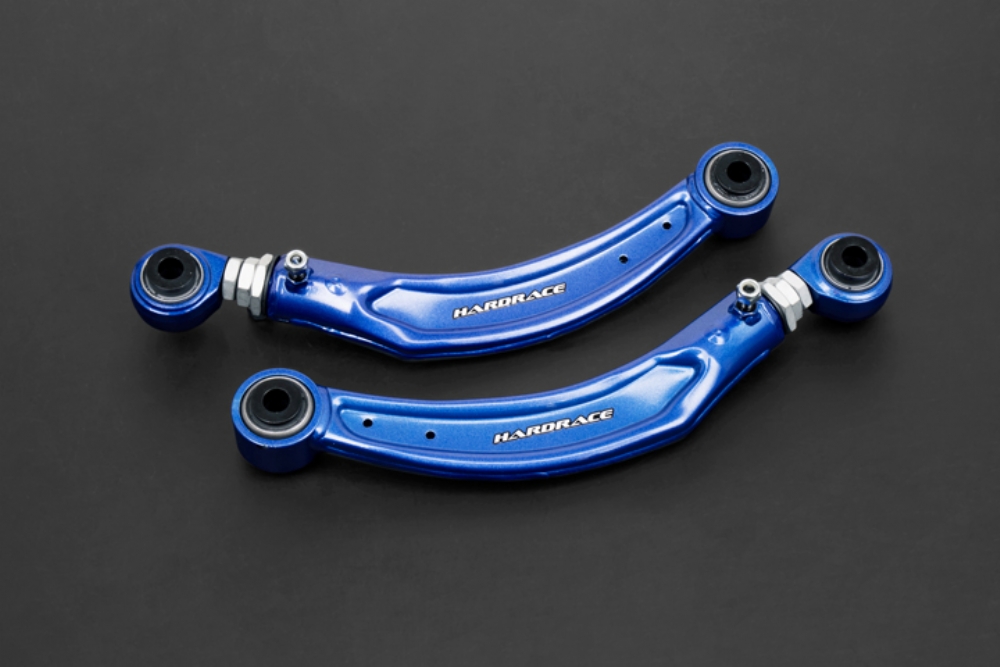
I found I will need a rear camber kit with the current ride height (lower), so to get rear tires fully touch to the road, now is -2deg with maximum stock camber adjustment.

 
Looks awesome! Was it a fairly easy change for the brakes?
I would say it's not easy at all if you plan to do the same front & rear brake as mine. There are some custom items like center disc and caliper adapter bracket. But, if you have everything ready and test fitted, the brake change install is easy work. The rear brake is bit more work as there are two calipers, one is electronic hand brake and another one is rear brake.
 
Are you familiar with the software calibration procedures for ICCU DC-DC converters?

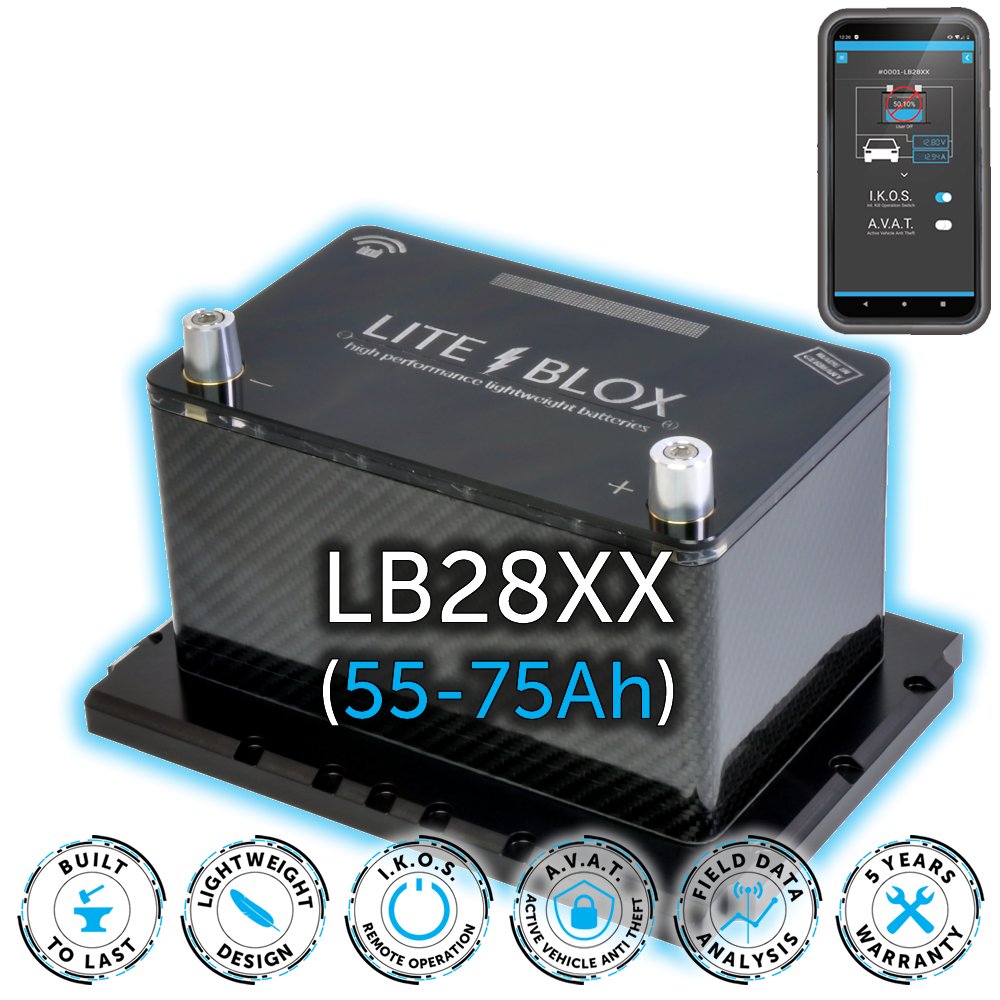
The integrated low-voltage DC-DC converter is not compatible with lithium-ion battery chemistry and the voltage profile of the specified battery.

The onboard DC-DC converter can supply 15.1V, significantly exceeding the capacity of your proposed aftermarket solution.

The battery BMS's ability to interrupt charging or discharging poses a safety risk during operation if the battery unexpectedly enters protection mode, resulting in a complete loss of the low-voltage DC system.
There is also possibility of damaging electronics on the low DC side if this battery turns off charging ( Onboard DC-DC converter is producing ripple effect and lead-acid chemistry as buffer and prevents from ripple effect reaching can bus network ( another concern associated with this type of battery).
I hope you are not operating on legal roads with this battery.
 
Are you familiar with the software calibration procedures for ICCU DC-DC converters?

The integrated low-voltage DC-DC converter is not compatible with lithium-ion battery chemistry and the voltage profile of the specified battery.

The onboard DC-DC converter can supply 15.1V, significantly exceeding the capacity of your proposed aftermarket solution.

The battery BMS's ability to interrupt charging or discharging poses a safety risk during operation if the battery unexpectedly enters protection mode, resulting in a complete loss of the low-voltage DC system.
There is also possibility of damaging electronics on the low DC side if this battery turns off charging ( Onboard DC-DC converter is producing ripple effect and lead-acid chemistry as buffer and prevents from ripple effect reaching can bus network ( another concern associated with this type of battery).
I hope you are not operating on legal roads with this battery.
Below link is the battery I am using now, and this is LiFePO4 not lithium-ion ;)

 
Below link is the battery I am using now, and this is LiFePO4 not lithium-ion ;)

This still has independent BMS that can cause dangerous situation of 12V battery BMS decide to turn off charging or discharging.
LFP chemistry will be overcharged any time onboard ICCU DC-DC converter profile call for 15.1V.
 
Lithium iron phosphate (LFP) chemistry. Cell voltage ranges up to a maximum of 3.65V (though most manufacturers impose a lower hard limit). A four-cell series connection yields a nominal voltage of 3.65V x 4 = 14.60V. LFP chemistry exhibits a relatively flat voltage profile. Over time, a 12V battery's battery management system (BMS) may lose accuracy in state-of-charge (SOC) tracking, a phenomenon known as drift. Consequently, the battery pack may display an inaccurate SOC. The lower voltage limit for LFP chemistry is 2.60V, resulting in a minimum pack voltage of 2.60V x 4 = 10.4V. Manufacturers of 12V LFP batteries typically advertise a voltage range of 2.6V to 3.65V. Vehicle electronics operate within a voltage range of 11.2V to 15.1V. Therefore, only 30-40% of the LFP chemistry's actual capacity will be utilized, and the 12V battery will not operate at optimal capacity or voltage.
So to give you better idea.
ICCU DC-DC converter has dynamic voltage and current profile.
It has ability to provide current much higher than what you posted for LFP chemistry. It has much higher voltage than what your LFP battery can handle.
You will be risking to loose control of the power steering , can bus network, modules that run on low DC side, communication for low DC side.
While in motion, try to imagine your car is completely dead and you are left to still operate steering wheel without 12V power assist, ABS system will be dead, mechanical foot brake only, getting confused at the moment of this happening, getting involved in catastrophic accident and etc.
Software and dynamic voltage and current profiles are designed to handle lead-acid chemistry.
If you want more robust lead-acid chemistry go for AGM lead-acid chemistry and use LFP 12V battery as home storage or something else.
 
Okay, enough with the scary stuff.

If you want, I can explain how to make 12V lithium-ion batteries (LFP or NMC) safe enough for cars and legal roads.
But if you go this route it will not be cheap.
 
For people trying to post about sodium chemistry.
Sodium chemistry, huh? Electric vehicles are still hobbled by that independent BMS on the 12V battery and its DC-DC converter. Let me break it down. The DC-DC converter needs CAN bus or LIN to talk to the 12V battery's BMS (for cell balancing, protection, etc.). That 12V battery needs a standard communication protocol. The car's ICCU needs software to chat with the 12V BMS. The 12V BMS has to obey the ICCU (if it cuts charging/discharging). The ICCU's hardware can't mess up the CAN bus. Reverse-engineering all this with extra hardware would take ages for a DIY project to get it reliable.
 
Hey, let's not give up yet.
I'd love to see someone tackle this retrofit, whatever it takes.
I'm happy to give you all the info you need to make it as reliable as a lead-acid battery, and totally street legal.
But one thing I would not be able to do.
To be tested by independent laboratory and receive all necessary approvals to be used in automotive industry and become certified for use on legal roads.