
Hi all,
I'm after a bit of guidance on my i30n FL DCT.
I've just had the front tyres replaced. They were Michelin PS5 and had done around 9,500 miles. Tread depth was approximately 2 mm on the inner grooves and 2.5 mm on the outer, so I felt I'd pretty much got my money's worth out of them but without going excessively close to the legal limit.
I'd been keeping a close eye on the tread for the last month or so as I knew they were getting close to replacement. What I didn't expect was for the tyre fitter to show me the inside shoulder of the tyres once they'd come off.
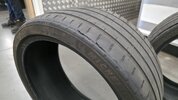
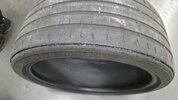
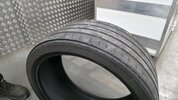
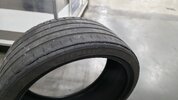
As you can see from the photos, the inner shoulder had split badly, with one tyre split for around three-quarters of its circumference. Looking at them now, I was probably only a handful of miles away from a blowout, which is a bit unsettling given I do enjoy stretching the N's legs on some familiar country roads.
In hindsight, I clearly wasn't checking the inner shoulder properly. To be fair, it's a difficult area to inspect unless you get right down on the floor or turn the steering to full lock, but a very useful lesson learned and noted for the future!
What's interesting is that the car had its service only 3,000 miles ago (February) and nothing was mentioned about the tyres, so whatever has happened seems to have developed relatively quickly.
These are the third set of front tyres the car has had. The first two sets were the OEM Pirelli P Zeros, and although they wore out normally, they never showed damage like this. Before the i30 N I also ran several sets of Michelin PS4S on my Megane 4 RS without seeing anything similar.
Car has done 18,500 miles, no track days, just spirited road driving on some B-roads. Tyre pressure always kept at recommended cold value and never driven on under-inflated.
The tyre fitter suggested it could be worth checking the wheel alignment, or possibly a worn suspension bush, although the car has only covered 18.5k miles.
I'm aware that these cars can wear the inside edges of the front tyres, but this seems quite different from normal inner-edge wear?
Has anyone else experienced anything similar with PS5s or on an i30 N? Does this look like an alignment/suspension issue, heat-related shoulder failure, or something else? I'm planning to get a full four-wheel alignment done, but I'd be interested to hear if anyone has seen this before.
<ChatGPT assisted with writing this post - mostly because I suck with grammar and spelling!>
I'm after a bit of guidance on my i30n FL DCT.
I've just had the front tyres replaced. They were Michelin PS5 and had done around 9,500 miles. Tread depth was approximately 2 mm on the inner grooves and 2.5 mm on the outer, so I felt I'd pretty much got my money's worth out of them but without going excessively close to the legal limit.
I'd been keeping a close eye on the tread for the last month or so as I knew they were getting close to replacement. What I didn't expect was for the tyre fitter to show me the inside shoulder of the tyres once they'd come off.
As you can see from the photos, the inner shoulder had split badly, with one tyre split for around three-quarters of its circumference. Looking at them now, I was probably only a handful of miles away from a blowout, which is a bit unsettling given I do enjoy stretching the N's legs on some familiar country roads.
In hindsight, I clearly wasn't checking the inner shoulder properly. To be fair, it's a difficult area to inspect unless you get right down on the floor or turn the steering to full lock, but a very useful lesson learned and noted for the future!
What's interesting is that the car had its service only 3,000 miles ago (February) and nothing was mentioned about the tyres, so whatever has happened seems to have developed relatively quickly.
These are the third set of front tyres the car has had. The first two sets were the OEM Pirelli P Zeros, and although they wore out normally, they never showed damage like this. Before the i30 N I also ran several sets of Michelin PS4S on my Megane 4 RS without seeing anything similar.
Car has done 18,500 miles, no track days, just spirited road driving on some B-roads. Tyre pressure always kept at recommended cold value and never driven on under-inflated.
The tyre fitter suggested it could be worth checking the wheel alignment, or possibly a worn suspension bush, although the car has only covered 18.5k miles.
I'm aware that these cars can wear the inside edges of the front tyres, but this seems quite different from normal inner-edge wear?
Has anyone else experienced anything similar with PS5s or on an i30 N? Does this look like an alignment/suspension issue, heat-related shoulder failure, or something else? I'm planning to get a full four-wheel alignment done, but I'd be interested to hear if anyone has seen this before.
<ChatGPT assisted with writing this post - mostly because I suck with grammar and spelling!>
Attachments
Last edited:

