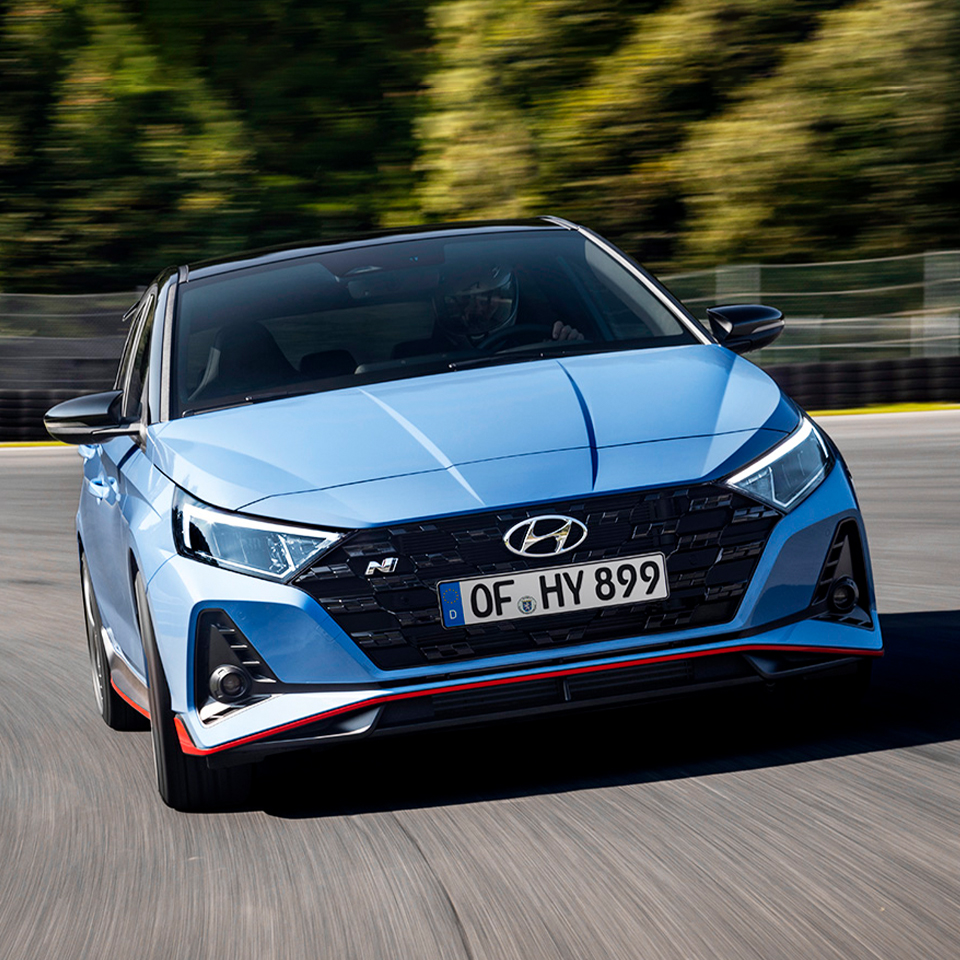
• Welcome to N-cars.net - the largest Hyundai N car forum. Check out the model specific sections below and scroll down for country specific forums. Scroll down for i30 N, Ioniq 5 N, i20 N, Veloster N and Kona N forums! Check out the i30 N Bible Here!

Tuning i20N Engine & ECU Tuning Discussion

Correct, they use N75 to tune the ECU, but it's not as simple as you might think. There are a lot of wires to connect and each tune is based on other existing upgraded parts. They will send dyno data to N75, who send back the tune (based on the customers expectations) and then Sean will flash the ECU. Forge are intake and exhaust specialists.
I am aware of what they (Forge) do but Hyundai Tuning themselves posted they got the tune files off of Forge. Copy and pasted from the Facebook post.

Big news for i20N owners, working with our friends at Forge Motorsport we now have access to the tune files they use in the UK. We have purchased a new tool which will hopefully be here before Xmas
 
  • Like
Reactions: h_erc
I am aware of what they (Forge) do but Hyundai Tuning themselves posted they got the tune files off of Forge. Copy and pasted from the Facebook post.

Big news for i20N owners, working with our friends at Forge Motorsport we now have access to the tune files they use in the UK. We have purchased a new tool which will hopefully be here before Xmas
which makes them v1 files.
not necessarily going to work with a v2.
 
I've had a joyous time with Ghidra, HxD and WinOLS 😑 found a few 1x1 values in the image that are linked to abs manifold pressure that've been changed and still limited, i'm aware of an airflow limit in the RAM section of the .bin file but it shouldn't limit boost really until 5k onwards which is why a lot of tuners get that dip in the high revs. I'm thinking it's the MAP sensor voltage but at this point I'm not sure, still looking for that table. It's one of those, money to be made by people who do know and could lock it behind paid mappacks in the EVC portal so to be fair, it's only expected they'd keep it to themselves.

View attachment 26749
Cherry Tuning mentioned they weren't limited by boost, but some max airflow value that is apparently hardcoded in the rom (at least in the v2, not sure in v1). they have tuned cars with hybrid turbos and made good numbers, but pushing boost higher just runs into the max airflow value sooner. they havent given up on cracking it though and still actively looking for a way to patch the rom to get past it. i'm hoping that it becomes possible in the next 12months or so, which is about the earliest i'd see myself looking to add a tune...
 
Last edited:
Cherry Tuning mentioned they weren't limited by boost, but some max airflow value that is apparently hardcoded in the rom (at least in the v2, not sure in v1). they have tuned cars with hybrid turbos and made good numbers, but pushing boost higher just runs into the max airflow value sooner. they havent given up on cracking it though and still actively looking for a way to patch the rom to get past it. i'm hoping that it becomes possible in the next 12months or so, which is about the earliest i'd see myself looking to add a tune...
it's possible, klaasen and courtenay sport can do it, it's just a matter of accessing the ROM, you can only do it with CMDflash currently, it's the only tool with a protocol capable of reading/writing to it. Big Fish haven't put anything out yet but it's all they've been working on for the last 2 months on these lol, it's just time consuming amongst keeping the shop running, i'm sure there'll be an update in february as they have a car to work on for the next few weeks!
 
Correct, they use N75 to tune the ECU, but it's not as simple as you might think. There are a lot of wires to connect and each tune is based on other existing upgraded parts. They will send dyno data to N75, who send back the tune (based on the customers expectations) and then Sean will flash the ECU. Forge are intake and exhaust specialists.
that would explain why they've been ignoring all my comments telling them to try altering the values i mentioned in my above post lol
 
  • Like
Reactions: YNWaN
that would explain why they've been ignoring all my comments telling them to try altering the values i mentioned in my above post lol
Clearly, I'm not the expert when it comes to cars. I specialise in electronics so I can't really say much about that. I am taking my i30N there on the 1/2 to get a tune, front rotor and intima pads all round. Additionally I'm getting a flow body kit and some other cosmetics. I've already got a dump pipe, mid pipe. pod air filter, turbo elbow, hks plugs, engine bushing, forge intercooler and gts black race chip (which will be removed) and the car has never been on a dyno. It will be interesting to see the before and after. I did speak with Sean about getting that new turbo but he reckons I will be very happy with the performance. I have learned a lot in this post and on other threads here.
 
  • Like
Reactions: Cardinalsin
that would explain why they've been ignoring all my comments telling them to try altering the values i mentioned in my above post lol
Yes, it looks like they are just acting as third party sellers and aren’t actually doing any of the software/tune development. From what I can see this approach seems to be very common in the world of tuning and it’s relatively rare to find tuners actually delving into the raw code. Unfortunately these generic maps appear to be pretty crude with max power being made quite early in the rev range and then falling off quickly as the revs increase. I honestly think that some of the tuning boxes do a better job.
 
  • Like
Reactions: Zealot
Another Big One, Hope you're not too sick of these developments...

Recently my car has been back to Big Fish for further development tuning. A few interesting things to take note of and document that relate to the widespread tuning of these cars:

TP04PYE (1).png

Here's the updated graphs, (red) stock vs (green) previous tune version vs (blue) updated tune

So the takeaway here is that the torque is much more linear and power doesn't tank at 4300 rpm. This happens on the previous tune because there's a RAM encoded limiter that slowly caps boost capping it at 2.5 bar absolute at 4300rpm and tapers down to a measly 2.1 bar absolute by redline, this is applied regardless of what you demand out of the turbo and there's no definitive alteration to patch this out as of yet. What you're probably thinking is "oh so they have gotten round this now"... the answer is yes and no. And the same goes for EVERY i20N tuner at least in Europe (I have no clue what those guys in Türkiye are doing but that 338hp build that runs 100-200 in 9.8 seconds is nuts. Speedy González if you're seeing this, hats off to you my friend).

The way the power is achieved in the top end by all the EU tuners is by messing with the closed loop boost control, demanding a flat and inflated boost value out of the turbo in the relevant maps and using torque modelling, WGDC and other limits to keep torque and boost within somewhat safe tolerance. This is also the case for hybrid turbo builds, being bigger and capable of flowing more air, it can make that extra power in the top end. Interestingly enough, from the very limited portion of this I've seen, no turbo efficiency maps have been altered on hybrid builds essentially making the ECU think the stock turbo is still in place which is interesting, there could be some more juice to extract out of full control over the turbo.

This works BUT the ECU has NO idea how much boost the car is making as a result... It's almost like using a tuning box if you want to think about it that way, obviously there's so much more control over everything else that a tuning box can't do so I'd still argue this is much safer than just tricking the fuel and MAP sensors into reading low to make more power. What this can do is cause a bit of funny behaviour with aftermarket blow off valves, I've noticed mine at very low pressures when downshifting sometimes just won't open causing very minor off throttle surge (flutter), sounds cool but it's not good for turbo life which I'm not so bothered about, you might be though so just keep that in mind. Also, when downshifting at higher revs it opens quickly and then closes again until you fully come off the clutch, which again sounds a bit funny but I'm not hearing flutter (surge) in that scenario which I suppose is better than it surging heavily.

The car does feel immense with this smooth power rather than being very diesel-esque though, just keeps on pulling all the way to redline, which you may also notice has been upped to 7k. I daren't rev it out that far often though. it's much faster over timed runs with my car managing 60-120mph in 15.39 seconds, down from about 19 on the previous tune and you might think 19 is barely faster than standard and that is true but obviously that's down to the lack of power gain over stock post 5000 rpm where you might expect the car to spend most of it's time during a timed run like that.

I've also opted to cap the torque on this tune which is why it makes slightly less power before 4000rpm (the power after more than makes up for it and it's barely even noticeable) I've done this for the life of the clutch, I made another post on clutch replacement options as at 400+Nm, these do love a good slip. I think with them being NEW cars and many being tuned before the clutch is even close to end of life, we thought it was a super sturdy unit, but it's not at all, it can hack 400Nm for about 5000 -10000 miles from fresh depending on your driving style and then repeated hard use will have it slipping often. Since capping at 380Nm, I've barely noticed any slippage even after being brutalised by such an immense amount of torque for 6000 miles and even with my spirited driving style. It still needs replacing but this should extend the life of the stock clutch and I'd recommend when tuning, you have your tuner cap torque below 400Nm so you don't end up replacing the clutch "prematurely".

Obviously there's still work to be done on the ECU as this isn't 100% ideal and patching that top end limiter whilst maintaining control over the boost means you can hold a much flatter and safer value on command rather than relying on other factors to maintain boost instead. Hybrid is the next step for me personally but I'll be waiting until full software control of the boost is available.

Thanks for the read,

Tom

 
When you say your ‘car has been back to Big Fish’, don’t you work for them now?
 
When you say your ‘car has been back to Big Fish’, don’t you work for them now?
I wish I worked in the tuning industry haha. in this case, I bothered them for months and months to try this and they caved eventually, only charging me for this work as tweaks to the tune and they want to hear my opinions on it before they'll let other customers have it.

Wanna know what gives it away that this is how the hybrid builds work too?

6:09 in this video of a Klasen stage 3 i20N at around 300hp:

You can see the dashboard displays 91 kPa and 220nm torque, I noticed before when the full boost control was working without these tweaks, it would pretty much sit at a flat 1.3 bar (130 kPa) and 320Nm all the way to 6k and then start to dip, now it won't exceed 1.1 bar (110 kPa) - 300Nm even though the turbo is actually making about 1.65 bar peak at points.
 
Another Big One, Hope you're not too sick of these developments...

Recently my car has been back to Big Fish for further development tuning. A few interesting things to take note of and document that relate to the widespread tuning of these cars:

View attachment 27563

Here's the updated graphs, (red) stock vs (green) previous tune version vs (blue) updated tune

So the takeaway here is that the torque is much more linear and power doesn't tank at 4300 rpm. This happens on the previous tune because there's a RAM encoded limiter that slowly caps boost capping it at 2.5 bar absolute at 4300rpm and tapers down to a measly 2.1 bar absolute by redline, this is applied regardless of what you demand out of the turbo and there's no definitive alteration to patch this out as of yet. What you're probably thinking is "oh so they have gotten round this now"... the answer is yes and no. And the same goes for EVERY i20N tuner at least in Europe (I have no clue what those guys in Türkiye are doing but that 338hp build that runs 100-200 in 9.8 seconds is nuts. Speedy González if you're seeing this, hats off to you my friend).

The way the power is achieved in the top end by all the EU tuners is by messing with the closed loop boost control, demanding a flat and inflated boost value out of the turbo in the relevant maps and using torque modelling, WGDC and other limits to keep torque and boost within somewhat safe tolerance. This is also the case for hybrid turbo builds, being bigger and capable of flowing more air, it can make that extra power in the top end. Interestingly enough, from the very limited portion of this I've seen, no turbo efficiency maps have been altered on hybrid builds essentially making the ECU think the stock turbo is still in place which is interesting, there could be some more juice to extract out of full control over the turbo.

This works BUT the ECU has NO idea how much boost the car is making as a result... It's almost like using a tuning box if you want to think about it that way, obviously there's so much more control over everything else that a tuning box can't do so I'd still argue this is much safer than just tricking the fuel and MAP sensors into reading low to make more power. What this can do is cause a bit of funny behaviour with aftermarket blow off valves, I've noticed mine at very low pressures when downshifting sometimes just won't open causing very minor off throttle surge (flutter), sounds cool but it's not good for turbo life which I'm not so bothered about, you might be though so just keep that in mind. Also, when downshifting at higher revs it opens quickly and then closes again until you fully come off the clutch, which again sounds a bit funny but I'm not hearing flutter (surge) in that scenario which I suppose is better than it surging heavily.

The car does feel immense with this smooth power rather than being very diesel-esque though, just keeps on pulling all the way to redline, which you may also notice has been upped to 7k. I daren't rev it out that far often though. it's much faster over timed runs with my car managing 60-120mph in 15.39 seconds, down from about 19 on the previous tune and you might think 19 is barely faster than standard and that is true but obviously that's down to the lack of power gain over stock post 5000 rpm where you might expect the car to spend most of it's time during a timed run like that.

I've also opted to cap the torque on this tune which is why it makes slightly less power before 4000rpm (the power after more than makes up for it and it's barely even noticeable) I've done this for the life of the clutch, I made another post on clutch replacement options as at 400+Nm, these do love a good slip. I think with them being NEW cars and many being tuned before the clutch is even close to end of life, we thought it was a super sturdy unit, but it's not at all, it can hack 400Nm for about 5000 -10000 miles from fresh depending on your driving style and then repeated hard use will have it slipping often. Since capping at 380Nm, I've barely noticed any slippage even after being brutalised by such an immense amount of torque for 6000 miles and even with my spirited driving style. It still needs replacing but this should extend the life of the stock clutch and I'd recommend when tuning, you have your tuner cap torque below 400Nm so you don't end up replacing the clutch "prematurely".

Obviously there's still work to be done on the ECU as this isn't 100% ideal and patching that top end limiter whilst maintaining control over the boost means you can hold a much flatter and safer value on command rather than relying on other factors to maintain boost instead. Hybrid is the next step for me personally but I'll be waiting until full software control of the boost is available.

Thanks for the read,

Tom
Just as a note on the rest of this post, what seems to be messed with rather than the boost control is the MAP sensor linearisation, and changing the values of voltage that the ECU attributes to certain boost values. Generally peak boost is the peak voltage in that map so by setting the value of the voltage lower, scaling the axis in the map differently or lowering the data within the MAP you could essentially trick the ECU in to making the turbo make more boost, similar to how the tuning boxes work. Obviously the complex systems in the ECU then use other tables to make AFR, WGDC, Torque limits and other torque related maps to keep boost and turbo speed in check.

Another point to note is that hybrids vary heavily shop to shop, some are using hybrids with only slightly inflated sizes on compressor wheels others, such as those in Türkiye and other places that are experimenting are using larger exhaust housing as well which should help even more with that top end boost and as seen in Türkiye, results in a much better power figure. Boost control is still a MAJOR issue, from what I'm seeing, most are using standalone controllers OR this MAP sensor fooling method. Mine, even at a stage 2 level, is using this MAP sensor fooling method to make it's power to redline. As I say, it's not ideal but there's some tuners who aren't happy with the method and are working on it. It seems others are quite happy to put tunes out in to the world without the disclaimers or information on the risks of potential turbo overshoot or lean spikes that this sort of method may induce, especially on larger turbos...
 
  • Like
Reactions: Zealot
Who would that be then Tom?
 
As I say, the method is used pretty much across the board and the above scenarios remain highly unlikely hence I'm willing to apply it to my car, especially on it's stock turbo. I think this sort of conversation and these ever elongating forum threads brings a little more transparency to the actual working of tuning and to the risks involved with chasing certain power figures or using certain pieces of hardware. Other cars have seen power figures up to 381hp and have ended up blowing the plastic intake manifold to pieces because of the sheer boost pressure which again, had to be controlled via a standalone controller to make accurate boost and boost over 24 PSI (I believe the unfortunate car was running around or just north of 28PSI when it blew the manifold).

There's no shots at anyone, I just think some more open conversation is needed when it comes to what is actually being done to achieve results especially on the customer side, You can't promise SAFE results that rely on a potentially unsafe method of tuning, if there was a disclaimer sheet that said otherwise, by all means let me know but I'm sure all you signed was a generic "I acknowledge any damage is not your responsibility" sheet rather than being told what they were doing, why they were doing it, the risks associated and if you were happy with that.

It's a real issue amongst tuners that no one is willing to share any information and understandably because it is livelihoods and an edge over the competition is the difference between 1 customer and 100 customers. It also means they won't disclose anything amongst each other and there's no peer reviewing work, you put your sole trust in one person to do their best work and there's no one else to question it. Why do you think I spent months researching this in depth and trying my damned hardest with the original ECU file and a demo copy of WinOLS to find the 18psi 1x1... Because no one would tell me hahaha. I love your build and it's a real piece of engineering work, marvellous to watch tear up a track and a nuts 30-70 time, but I can't help but feel like now you feel a tad blindsided because no one would have ever told you how it's making that power.
 
  • Like
Reactions: Zealot and YNWaN
I would be interested to hear more about these cars that have achieved 381 HP? Do you mean i20Ns or cars running plastic intake manifolds in general?

The Car Jackals (in Greece) have built a number of billet aluminium engine parts for the i20N, including a billet intake manifold. I don’t know what they are intending to do regarding the ECU though and suspect a stand alone unit will have to be used.

With regard to my car, I’m less interested in the software side of things than you are. I appreciate the logic puzzle that it consists of but I’m not interested in doing that part of the work myself. It’s the same with computers, I use them every day and I understand the component parts, how they interact and even the logic structures they use to work, but actual programming holds no interest for me. I’ve done a bunch of the bolt on mods but the only bit of engineering is really the hybrid turbo and its tune - the only input I had there was paying for it.

As far as interpreting and decoding the i20N ECU it seems to me that the only way is to run repeated dyno runs with the ECU connected up and make small adjustments to identify which sections of code relate to which part and how changing the code impacts upon them. Unfortunately this means run after run and a lot of trial and error. I believe that, with a lot of experience, some tuners are able to recognise code strings that likely relate to certain elements but that still has to be confirmed by dyno running. Even then knowing the code doesn’t tell us what logic patterns/strings are being implemented. For example, you can’t just tell the ECU to put in more fuel and more air because there is an overriding logic running over these basic inputs. By far the best option is for someone who knows the original code to leak it - that’s why VAG group cars are so hacked. I believe the i20N unit is a Bosch (could be wrong on that) but they may not have access to the source code.

As you say, the tuning world is a very closed shop, but it’s far from unique in that respect. Any company that has a USP guards it and in the case of tuning that USP is knowledge. The reality is that most tuners simply buy a map and upload it to the car, they don’t do any actual coding. In the U.K. we are very luck to have two tuners who are interested in pushing forward.
 
  • Like
Reactions: Zealot
I would be interested to hear more about these cars that have achieved 381 HP? Do you mean i20Ns or cars running plastic intake manifolds in general?

The Car Jackals (in Greece) have built a number of billet aluminium engine parts for the i20N, including a billet intake manifold. I don’t know what they are intending to do regarding the ECU though and suspect a stand alone unit will have to be used.

With regard to my car, I’m less interested in the software side of things than you are. I appreciate the logic puzzle that it consists of but I’m not interested in doing that part of the work myself. It’s the same with computers, I use them every day and I understand the component parts, how they interact and even the logic structures they use to work, but actual programming holds no interest for me. I’ve done a bunch of the bolt on mods but the only bit of engineering is really the hybrid turbo and its tune - the only input I had there was paying for it.

As far as interpreting and decoding the i20N ECU it seems to me that the only way is to run repeated dyno runs with the ECU connected up and make small adjustments to identify which sections of code relate to which part and how changing the code impacts upon them. Unfortunately this means run after run and a lot of trial and error. I believe that, with a lot of experience, some tuners are able to recognise code strings that likely relate to certain elements but that still has to be confirmed by dyno running. Even then knowing the code doesn’t tell us what logic patterns/strings are being implemented. For example, you can’t just tell the ECU to put in more fuel and more air because there is an overriding logic running over these basic inputs. By far the best option is for someone who knows the original code to leak it - that’s why VAG group cars are so hacked. I believe the i20N unit is a Bosch (could be wrong on that) but they may not have access to the source code.

As you say, the tuning world is a very closed shop, but it’s far from unique in that respect. Any company that has a USP guards it and in the case of tuning that USP is knowledge. The reality is that most tuners simply buy a map and upload it to the car, they don’t do any actual coding. In the U.K. we are very luck to have two tuners who are interested in pushing forward.
You'd be best speaking to the owner Owen. Not sure if he lingers about this Forum but you can find him at ojsi20N if you have Instagram. As I've mentioned above there's cars in Türkiye hitting nearly 340 (338 I think is the official figure) but they don't really like to talk about it, I've asked and had little or no answer haha.

Here's the post he put out regarding his current setup before the manifold went pop:
Screenshot_20260326_104945_Instagram(1).jpg

I have seen those Car Jackals guys, absolutely nuts what they're doing, there's a lot of billet stuff but it all looks custom which is a shame. I think, given the plastic manifold has gone pop on much higher boost figures, it's probably a mod worth doing if you're looking to push nearly 400 and then obviously we're not sure what the blocks, rods, shafts, valves, head or anything of this engine can really take in the long run so their other parts may be a well worthwhile investment if they offer them to those willing to pay.

Yeah the input on the software side is a particular interest of mine so coming to learn how all of this works when it comes to upping power through software alteration, it was surprising for me to learn that it is more or less how the tuning boxes work, and if you look at dyno graphs it really makes sense as it more or less tends to follow the same shape but raised. I'd be interested to see what further development brings to the table, hopefully with full boost control, and as everyone starts to crack that, we'll see people raising the bar consistently.

You're along the right lines with how you interpret the working of it, there are tools that take the file a tuning tool reads and puts it in to a decompiling environment, you can slowly use what you know to build a bigger picture and there's hundreds of hours that go in to it. There's all sorts of function trees that query numerous maps, some can be 100's of lines long and query over 50 other table in the process. The i20N unit is Kefico which is VERY similar to Bosch, it's basically Hyundai taking Bosch stuff and tweaking it slightly. This means when looking at the file you can use older Bosch stuff in WinOLS to automatically identify quite a few maps. The only way to get to a point where you have that old VAG level of documentation is as you say, leaks internally or weeks/months/years of people's lives spent decompiling software in IDA Pro, Ghidra or similar tools.

100% on the tuning industry, it's a super closed booked and getting anything out of anyone (especially your newer stuff) is like drawing blood from a stone. Most tuners are just flash tuners, door to door or man in a van sorts of businesses that rent a tool from a proper shop or something similar and operate a 1 size fits all service which in a way leaves us quite spoilt with our options as far as tuning goes on these cars. They're not common and therefore flash tunes look awful side by side with the proper custom tunes from CS or BF because they're still yet to have access to a file that's patched even the 18 PSI limiter located at 3894C8 in the file (I've had this location confirmed by TRS performance in straford upon avon and they've let me know it actually does allow for boost over 18 psi lol)
 
Last edited:
  • Like
Reactions: HY1000 and Taxxi